








Collagen peptides are one of the most widely used ingredients in supplements designed to support skin, joints, bones and connective tissue.
However, there is often confusion around what collagen peptides actually are, whether they are the same as hydrolyzed collagen and how they differ from traditional collagen proteins.
The short answer is simple:
Collagen peptides are small fragments of collagen protein obtained through a hydrolysis process that makes them suitable for use in supplements.
What Exactly Are Collagen Peptides?
Collagen is a structural protein naturally found throughout the body and forms part of tissues such as:
Provides structural support and forms part of the extracellular matrix.
A key protein component of connective tissue structures.
Forms part of structures associated with joint function.
Contributes to the organic matrix of bone tissue.
When we refer to collagen peptides, we are talking about smaller chains of amino acids derived from the original collagen protein.
These molecules are obtained through a process known as enzymatic hydrolysis, which breaks larger collagen proteins into smaller fragments.
Are Hydrolyzed Collagen and Collagen Peptides the Same?
In practice, both terms are usually used to describe the same type of ingredient.
Hydrolyzed collagen is collagen that has undergone a hydrolysis process to produce smaller peptide fragments.
A complete protein with a larger molecular structure.
Collagen processed through hydrolysis to break down its chains.
The smaller fragments obtained through this hydrolysis process.
For this reason, when a supplement label states “hydrolyzed collagen”, it is usually referring to a product made from collagen peptides.
What Are Collagen Peptides Used For?
Collagen peptides are mainly studied in relation to tissues where collagen has an important structural role.
Skin and Healthy Ageing
The skin contains a significant amount of collagen, and natural collagen production changes progressively throughout ageing.
Research has explored whether collagen peptide supplementation may influence parameters such as skin hydration, elasticity and appearance.
Results are promising, although outcomes depend on factors including dosage, duration of use and individual characteristics.
Tendons, Ligaments and Connective Tissue
Tendons and ligaments contain high levels of type I collagen.
Research has investigated collagen peptides combined with exercise, particularly regarding collagen synthesis and connective tissue adaptation.
This does not mean collagen can automatically repair an injury, but it may form part of a broader strategy that includes appropriate training and recovery.
Joints and Mobility
Collagen is also an important structural component of several tissues related to joint function.
Some clinical studies have investigated hydrolyzed collagen peptides in people experiencing joint discomfort, with research exploring outcomes such as pain perception, mobility and physical function.
However, collagen supplementation should not be considered a replacement for medical treatment or a guaranteed solution for joint problems.
Collagen peptides provide amino acids derived from one of the main structural proteins in connective tissues.
Mechanical stimulation through appropriate exercise remains an important factor in maintaining healthy tissues.
Results may vary depending on the formula, dosage, duration and personal circumstances.
How Do You Take Collagen Peptides?
The ideal collagen peptide dosage depends on the objective and the specific product formulation.
Studies investigating collagen peptides commonly use amounts ranging approximately from 2.5 to 15 grams per day, depending on the area being studied.
Research usually evaluates collagen supplementation over several weeks or months rather than expecting immediate changes.
There is no single mandatory time to take collagen peptides. Regular daily intake is usually the most relevant factor.
For connective tissue, combining supplementation with appropriate mechanical stimulus is particularly relevant.
Collagen Peptides vs Whey Protein: What Is the Difference?
Although both are sources of protein, collagen peptides and whey protein serve different purposes.
Their main interest is related to connective tissues such as skin, tendons, ligaments and joint-related structures.
A complete protein rich in essential amino acids commonly used to help meet requirements related to muscle maintenance and development.
For this reason, collagen peptides and whey protein should not be viewed as competing supplements.
An active individual may use whey protein to help achieve adequate daily protein intake and collagen peptides as an additional strategy focused on connective tissue support.
Centenarian Road Hydrolyzed Collagen Powder
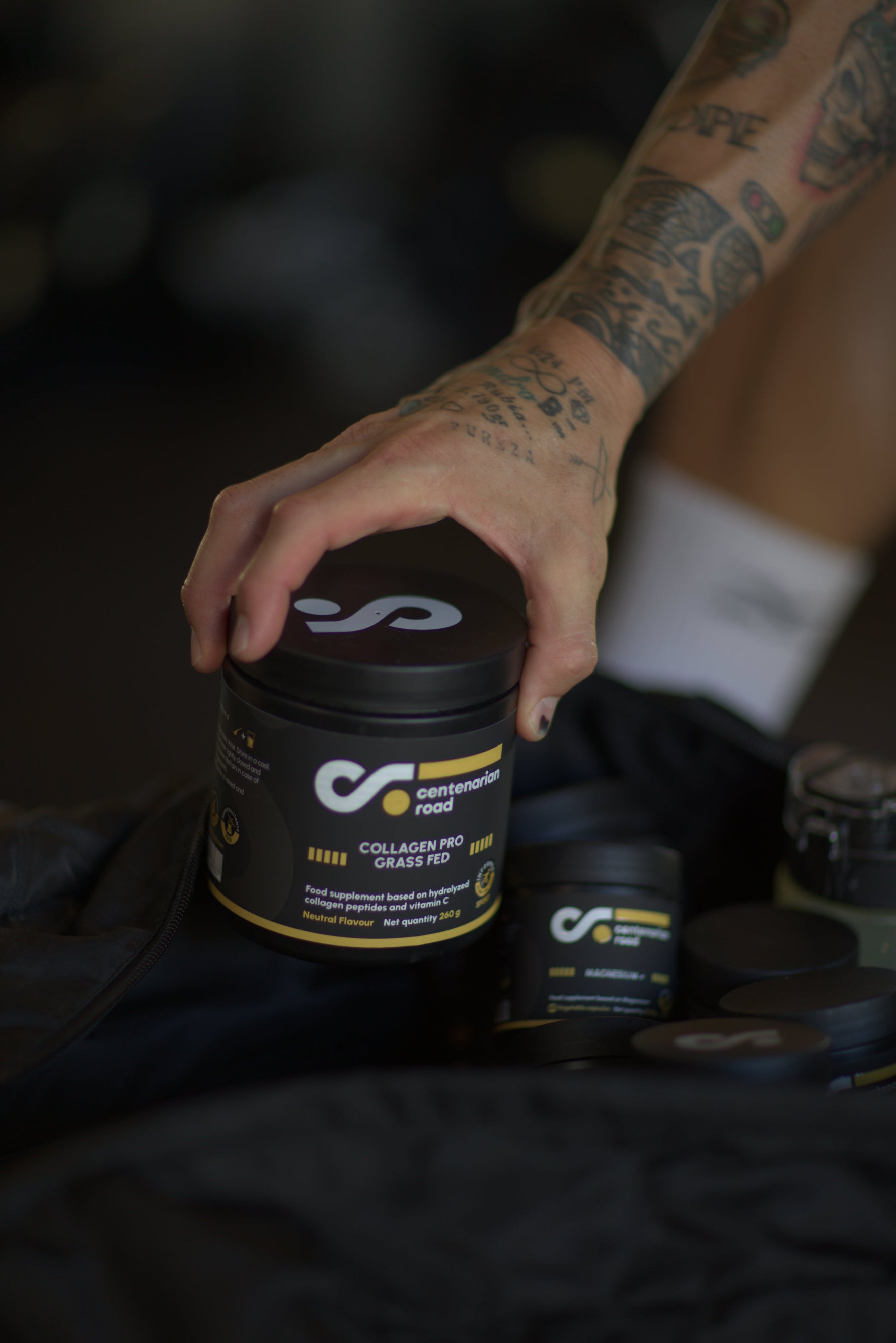
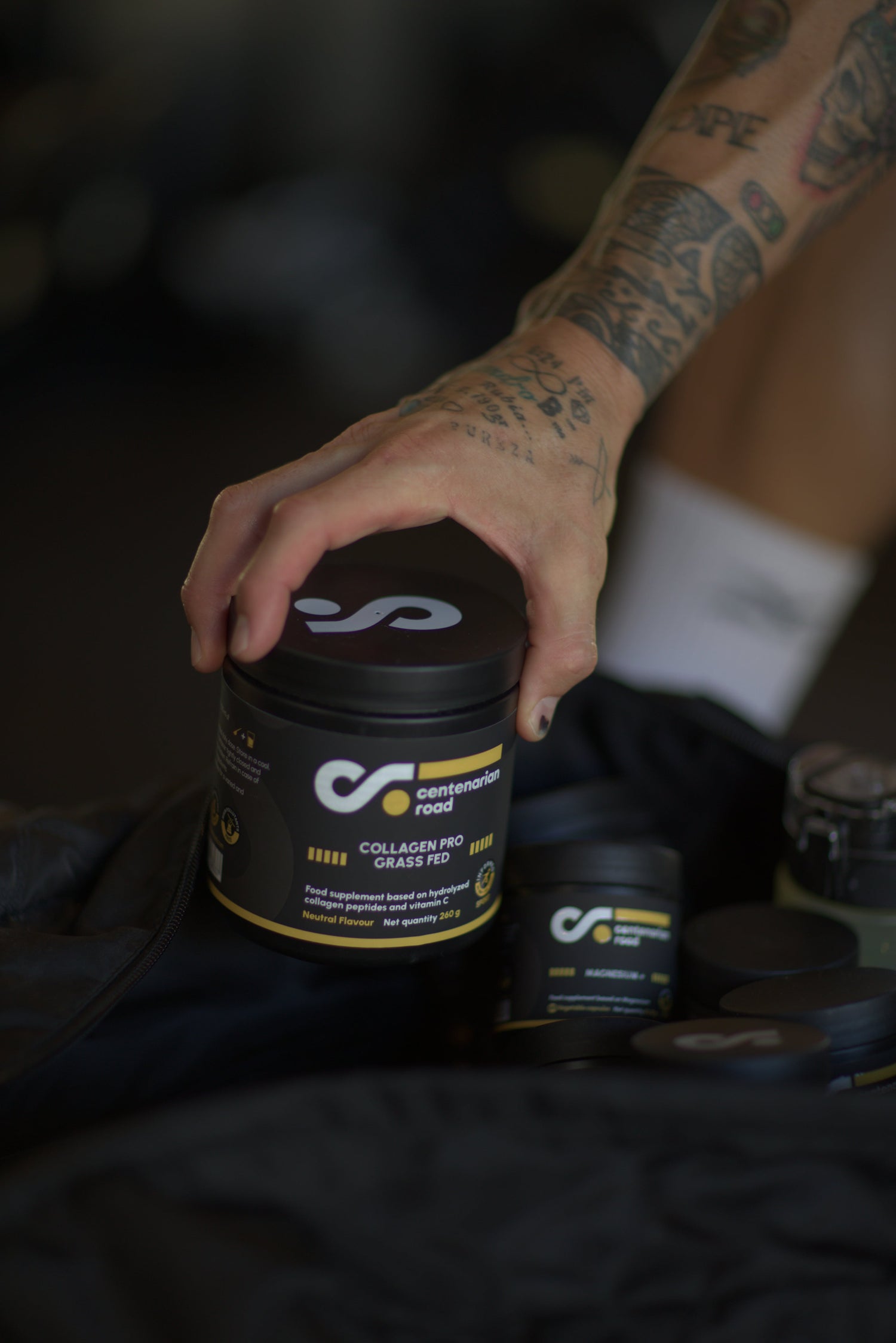
Centenarian Road Hydrolyzed Collagen Powder provides hydrolyzed collagen peptides together with vitamin C.
Vitamin C contributes to normal collagen formation for the normal function of cartilage, bones and skin.
Of hydrolyzed collagen per serving.
Included as part of the formula to complement collagen intake.
Easy to incorporate into drinks, smoothies or recipes.
View Hydrolyzed Collagen Powder with Vitamin C

Frequently Asked Questions About Collagen Peptides
Collagen peptides have a smaller molecular size because they are produced through hydrolysis. This makes them suitable for use in supplements and allows researchers to study their absorption and potential effects in different tissues.
Studies on collagen peptides generally evaluate periods of several weeks or months. Immediate changes should not be expected, and results can vary depending on the person, dosage and intended goal.
Collagen should not be considered a replacement for complete protein sources when the goal is muscle development. For muscle-related goals, sufficient intake of complete protein and resistance training usually remain the priority.
Yes, in most supplements these terms refer to the same concept: collagen that has been hydrolyzed to create smaller fragments known as collagen peptides.
Conclusion: Collagen Peptides Are a Practical Way to Supplement Collagen
Collagen peptides are small collagen-derived protein fragments obtained through hydrolysis and commonly used in supplements focused on tissues where collagen plays a structural role.
Current research has explored their relationship with areas such as skin appearance, joint comfort and connective tissue health, although outcomes depend on factors including dosage, duration of use, individual characteristics and the specific formulation.
Collagen peptides should not replace a balanced diet, regular exercise or professional medical care when a specific health concern exists.
Their greatest value comes from using them as part of a broader strategy focused on supporting the body's tissues through nutrition, movement and healthy lifestyle habits.
Scientific References and Sources
Moskowitz RW. Role of collagen hydrolysate in bone and joint disease. Seminars in Arthritis and Rheumatism.
Review examining the potential role of collagen hydrolysate in joint-related conditions and connective tissue structures.
Shaw G et al. Vitamin C-enriched gelatin supplementation before intermittent activity enhances collagen synthesis. American Journal of Clinical Nutrition. 2017.
Study investigating vitamin C, gelatin supplementation and collagen synthesis responses related to exercise.
PubMed PMID: 27852613
de Miranda RB et al. Effects of hydrolyzed collagen supplementation on skin aging: systematic review and meta-analysis.
Systematic review examining hydrolyzed collagen supplementation and outcomes related to skin parameters.
Clark KL et al. 24-week study on the use of collagen hydrolysate as a dietary supplement in athletes with activity-related joint pain. Current Medical Research and Opinion. 2008.
Study investigating collagen hydrolysate supplementation in active individuals experiencing exercise-related joint discomfort.