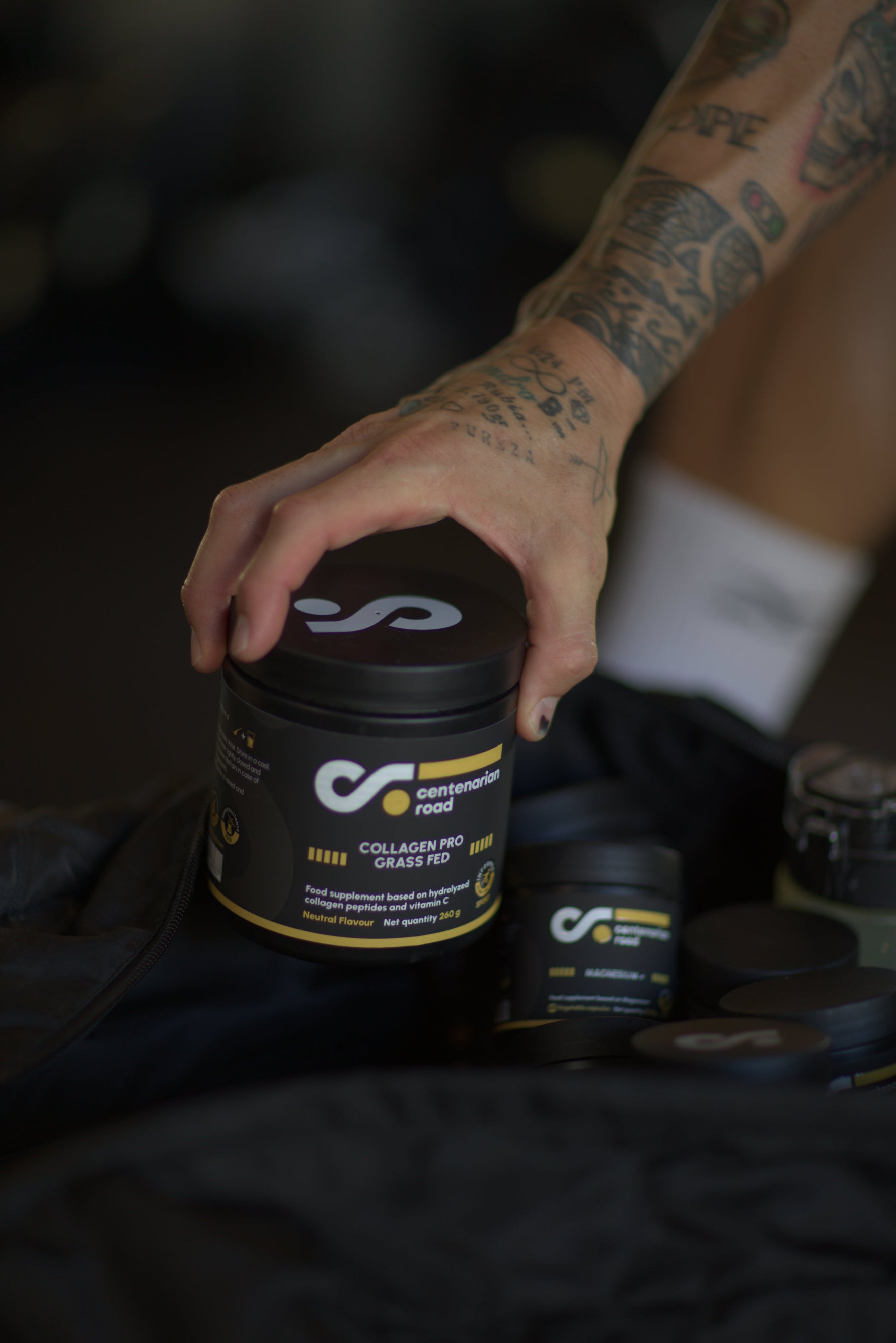











Supplements to maintain muscle mass with age are becoming increasingly relevant among people who want to preserve strength, mobility and physical independence throughout the ageing process.
As we get older, maintaining muscle is no longer only a question of appearance or athletic performance. Muscle plays an essential role in everyday function, balance, movement capacity and overall quality of life.
However, one principle remains fundamental: no supplement can replace resistance training, adequate nutrition and healthy lifestyle habits.
Supplementation can be a valuable tool when there is a specific need, when dietary intake does not fully meet requirements or when someone wants to optimise an already well-structured health and training strategy.
Why We Lose Muscle Mass as We Age
Progressive muscle loss is part of the ageing process, but its progression is not determined by age alone.
Muscle is a dynamic tissue that constantly responds to different signals, including exercise, nutrition, recovery and overall health status.
Over time, several changes may influence the ability to maintain muscle mass:
Lower physical activity levels and especially reduced resistance training can accelerate declines in muscle mass and functional capacity.
The body may respond differently to nutritional and exercise stimuli as we get older.
Sleep quality, recovery time and training load management become increasingly important.
Insufficient protein, energy intake or certain micronutrients may make maintaining muscle more challenging.
This process is commonly associated with sarcopenia, a term used to describe age-related declines in muscle mass, strength and physical function.
However, it is important to avoid an oversimplified view: ageing does not mean every person will lose muscle at the same rate.
Physical activity levels, especially regular resistance training, can significantly influence the ability to preserve strength and muscle function over time.
The Difference Between Ageing and Losing Muscle Function
Two people of the same age can have completely different levels of muscular health.
An active individual who performs resistance training, follows a balanced diet and maintains healthy habits may have a very different functional capacity compared with someone who is sedentary and consumes insufficient protein.
Shows how many years someone has lived, but does not fully define their muscular health.
Reflects the functional state of the body and may be influenced by lifestyle and environmental factors.
Muscle requires regular stimulus to maintain its adaptations and function.
Energy and nutrient availability influence the body's ability to repair and maintain tissues.
What Actually Helps Preserve Muscle as We Age?
The most effective strategy for maintaining muscle combines resistance training, adequate nutrition and proper recovery.
Before considering supplements, it is important to review the foundations that have the greatest impact.
One of the most important stimuli for maintaining and improving muscle capacity throughout ageing.
Provides the amino acids required for normal muscle repair and tissue maintenance.
Too little energy availability can make maintaining muscle mass more difficult.
Rest is a fundamental part of the adaptation process following exercise.
For this reason, supplements should be viewed as support within a broader strategy, not as an independent solution.
Supplements With the Most Evidence for Maintaining Muscle Mass
Not all supplements have the same level of scientific support or serve the same purpose.
Some may be useful when there is a specific need, while others provide limited value if the fundamental pillars are already covered.
Protein: Meet Your Needs Before Adding Supplements
Protein is one of the most important nutrients for maintaining muscle throughout ageing.
Muscle requires an adequate supply of amino acids to support normal repair and renewal processes.
Exact requirements depend on factors such as age, physical activity, health status and goals, but active individuals generally require more protein than sedentary people.
Scientific reviews have explored the relationship between protein intake, exercise and muscle preservation in older adults, highlighting the importance of combining adequate nutrition with resistance training.
Protein: Food First, Supplements When Needed
Protein is one of the most important nutrients for preserving muscle mass throughout ageing.
Muscle tissue requires an adequate supply of amino acids to support normal repair, maintenance and adaptation processes.
Exact protein requirements vary depending on factors such as age, activity level, health status and individual goals. However, physically active adults generally require more protein than sedentary individuals.
Scientific research has explored the relationship between protein intake, exercise and muscle preservation in older adults, highlighting the importance of combining adequate protein consumption with resistance training.
Foods such as meat, fish, eggs, dairy products, legumes and other protein sources can provide high-quality protein.
A protein powder can make it easier to reach daily requirements when food intake alone is inconvenient or insufficient.
Spreading protein intake throughout the day may be a useful strategy compared with consuming most protein in a single meal.
Whey protein can be particularly practical for people who find it difficult to consistently reach their protein requirements through regular meals.
View Native Whey Protein Isolate
Creatine: One of the Most Studied Supplements for Strength and Muscle Function
Creatine monohydrate is one of the supplements with the strongest scientific support when discussing strength, muscle performance and high-intensity exercise capacity.
Creatine contributes to the muscle energy system through the regeneration of ATP, a molecule essential for producing energy during short, intense efforts.
Although traditionally associated with sports performance, recent research has also explored its role in older adults, particularly when combined with resistance training.
Current evidence suggests that creatine may be a valuable tool for improving certain aspects of strength and muscle function, although it should always be considered within the broader context of exercise and nutrition.
The combination with strength training is the area where scientific interest is strongest.
Creatine monohydrate is the form with the greatest amount of available research.
Creatine can support training adaptations but does not replace the stimulus required to maintain muscle.
Common protocols involve regular daily intake to maintain muscle creatine stores.
A common strategy is consuming approximately 3-5 grams of creatine monohydrate daily. Some individuals use an initial loading phase to accelerate muscle saturation, although it is not essential.
It is important to maintain realistic expectations: creatine does not prevent age-related muscle loss on its own. Its potential benefits appear mainly when combined with appropriate training and sufficient nutritional support.
View Creatine Monohydrate Creapure®
Vitamin D: Important When Insufficiency Exists
Vitamin D contributes to several physiological functions related to bone health, muscle function and calcium metabolism.
However, getting older does not automatically mean having a vitamin D deficiency.
Vitamin D status depends on multiple factors:
The amount of sunlight received influences the body's natural vitamin D production.
Some foods provide vitamin D, although achieving sufficient levels through diet alone may be challenging for some people.
Certain changes associated with ageing may influence the ability to maintain adequate levels.
Health conditions, medication use and personal circumstances may affect requirements.
For this reason, vitamin D should not be recommended solely because someone wants to preserve muscle or has reached a certain age.
When insufficiency is confirmed or professional guidance recommends it, supplementation may form part of an appropriate strategy.
Omega-3: Evaluate Your Diet First
Omega-3 fatty acids EPA and DHA play important roles in the body, but not every adult needs to supplement with them.
Before considering a supplement, it is worth reviewing whether your diet already includes regular sources of omega-3, especially oily fish.
The relationship between omega-3 and muscle maintenance has been studied mainly in older adults, but current evidence does not support considering it an essential supplement for preserving muscle mass.
These are the most researched omega-3 fatty acids and are mainly found in oily fish and fish oil supplements.
Diet remains the primary source of essential nutrients.
Omega-3 does not perform the same role as protein in supporting muscle maintenance.
The potential value depends on dietary patterns and personal needs.
Therefore, omega-3 may have a place within an overall nutrition strategy, but it should not be presented as a direct “muscle-building supplement” by itself.
Magnesium: Useful When There Is a Real Need
Magnesium is involved in numerous processes related to muscle function, the nervous system and energy metabolism.
However, this does not mean that increasing magnesium intake through supplements will automatically improve strength or muscle mass in everyone.
Magnesium contributes to normal processes involved in muscle contraction and relaxation.
If dietary intake already meets requirements, consuming additional amounts does not necessarily provide extra benefits.
Supplementation may be considered when intake is insufficient or certain factors increase the likelihood of deficiency.
The chemical form and amount of elemental magnesium provided are important considerations.
A sensible approach is to evaluate diet and individual circumstances first, rather than using magnesium as a universal solution for every muscle-related concern.
Collagen: Related to Connective Tissue, Not Muscle Protein
Collagen is often discussed in the context of healthy ageing, but it is important to understand its specific role.
Collagen should not be considered equivalent to whey protein when the primary goal is maintaining or developing muscle mass.
Its relevance in sports nutrition and ageing research focuses mainly on collagen-rich structures such as tendons, ligaments and other connective tissues.
Complete protein sources and resistance training are usually the priority for maintaining muscle mass.
Collagen research has focused mainly on connective tissue structures.
Vitamin C contributes to normal collagen formation within the body.
Mechanical loading remains essential for tissues to adapt to exercise.
Centenarian Road Hydrolyzed Collagen Powder provides hydrolyzed collagen together with vitamin C, as part of a strategy focused on supporting connective tissue health.
View Hydrolyzed Collagen Powder
Popular Supplements That Require More Context
Not every supplement that is popular in the fitness world provides the same value when the goal is maintaining muscle during ageing.
BCAAs: Not a Priority If You Already Consume Enough Protein
Branched-chain amino acids (BCAAs), especially leucine, isoleucine and valine, play a role in muscle metabolism.
However, when someone already consumes enough complete protein, isolated BCAAs generally have a lower priority compared with covering the fundamentals first.
Provides all essential amino acids required for muscle protein synthesis.
Low energy availability can negatively affect the ability to maintain muscle mass.
Exercise remains the primary stimulus for preserving muscle.
Has broader research support regarding strength and muscle performance.
For this reason, BCAAs should not be presented as an essential supplement for preventing age-related muscle decline.
How to Choose a Supplement Strategy to Maintain Muscle as You Age
The best supplementation strategy does not begin with a list of products. It begins with identifying your actual needs.
Two people of the same age may require completely different approaches depending on physical activity, diet, goals and health status.
The priority should first be increasing physical activity, especially resistance training, and improving nutrition habits.
Optimising protein intake, recovery and specific nutrients may be useful depending on individual needs.
The combination of strength exercise and adequate nutrition is particularly important for preserving muscle.
Correcting a specific deficiency may be more important than adding sports supplements.
Before Buying a Supplement, Review These Points
Without sufficient muscle stimulus, no supplement can replace the signal needed to maintain muscle.
Daily protein intake should meet requirements before adding secondary supplements.
A calorie deficit that is too aggressive can make maintaining muscle mass more difficult.
Supplements are most useful when they address a clear and measurable objective.
Common Mistakes When Looking for Supplements to Maintain Muscle Mass
One of the biggest challenges with ageing-related supplementation is believing that a single product can compensate for all the factors that influence muscle health.
Age-related muscle decline is a complex process involving physical activity, nutrition, recovery, health conditions, hormones, lifestyle and many other variables.
Supplements can provide support, but they cannot replace resistance training and healthy lifestyle habits.
Adding multiple products makes it harder to understand what is actually helping and which need each supplement is addressing.
Focusing on isolated amino acids without reviewing overall protein consumption often leads to poor prioritisation.
Muscle requires an adaptation stimulus. Nutrients alone cannot replace exercise.
Supplement Safety: Why It Matters More With Age
As we get older, reviewing the safety and suitability of any supplement becomes increasingly important.
Many older adults use medications regularly for different health conditions. For this reason, not every supplement is appropriate for every individual.
Some supplements may require professional review when regular medications are involved.
Certain medical conditions require careful consideration before starting supplementation.
Higher doses do not automatically mean greater benefits.
Choosing supplements with clear ingredient information and manufacturing controls is important.
When there is a diagnosed health condition, regular medication use or uncertainty about combining specific supplements, consulting a healthcare professional is recommended.
The goal is not to take more products, but to use those that have a clear purpose within a safe and personalised strategy.

Frequently Asked Questions About Supplements to Maintain Muscle Mass With Age
No single supplement can maintain muscle by itself. The most important combination remains resistance training, sufficient protein intake and a balanced diet. Among the supplements studied, protein and creatine are two of the options with the strongest scientific interest.
Adequate protein intake is an important part of a strategy to preserve muscle mass. However, its effects also depend on physical activity, especially resistance training.
Creatine monohydrate is one of the most researched supplements related to strength and muscle performance. When combined with resistance training, it may be a useful tool, although recommendations should always consider individual circumstances.
Preventing sarcopenia does not depend on a single supplement. Maintaining physical activity, performing resistance training, consuming enough protein and supporting overall health are the main foundations.
Ageing involves physiological changes, but the speed and extent of muscle loss vary greatly between individuals. Exercise and healthy lifestyle habits can play an important role in preserving muscle function.
Collagen should not be considered a replacement for complete protein when the goal is maintaining muscle. Its main area of interest relates to connective tissues such as tendons and other collagen-rich structures.
BCAAs are involved in muscle metabolism, but when the diet already provides enough complete protein, they generally have lower priority compared with meeting total protein requirements.
Vitamin D is important for several functions in the body, including muscle function. However, supplementation is more relevant when insufficiency exists or there is a specific need, rather than simply because of age.
Conclusion: Maintaining Muscle With Age Depends on More Than a Supplement
Supplements can be part of a strategy to preserve muscle during ageing, but they do not replace the factors that have the greatest impact.
Resistance training, adequate nutrition, sufficient protein intake, quality sleep and healthy lifestyle habits remain the foundation of any effective approach.
Among the supplements with the strongest scientific interest are protein, when it helps meet nutritional needs, and creatine, particularly when combined with appropriate resistance training.
Other nutrients such as vitamin D, omega-3, magnesium or collagen may be useful in specific contexts, but they should be considered according to individual circumstances rather than simply because someone reaches a certain age.
The best strategy is not to accumulate supplements.
It is to understand what your body actually needs and use only those tools that provide meaningful value within a complete healthy ageing strategy.
Scientific References and Sources
Jäger R. et al. International Society of Sports Nutrition Position Stand: Protein and Exercise. Journal of the International Society of Sports Nutrition. 2017.
Position stand covering protein intake, exercise and nutritional requirements for physically active individuals.
PubMed PMID: 28642676
Cruz-Jentoft AJ et al. Sarcopenia: revised European consensus on definition and diagnosis. Age and Ageing. 2019.
European consensus document on the definition, diagnosis and clinical relevance of sarcopenia.
PubMed PMID: 30312372
Morton RW et al. Muscle hypertrophy and strength gains following resistance exercise training: a systematic review and meta-analysis. British Journal of Sports Medicine. 2018.
Systematic review examining resistance training, muscle hypertrophy and strength adaptations.
PubMed PMID: 29073412
Devries MC, Phillips SM. Supplemental protein in support of muscle mass and health: advantage whey. Journal of Food Science. 2015.
Review examining supplemental protein and its role in supporting muscle mass and health.
PubMed PMID: 26114434
NIH Office of Dietary Supplements — Dietary Supplements for Exercise and Athletic Performance.
Official reference covering ingredients commonly used in sports supplementation, including creatine and protein.
NIH Office of Dietary Supplements
NIH Office of Dietary Supplements — Vitamin D Fact Sheet.
Official information regarding vitamin D functions, sources, deficiency and supplementation.
NIH Office of Dietary Supplements