








If you are looking for a joint mobility supplement, you are probably looking for something more specific than a simple list of ingredients. The real question is which option makes the most sense depending on whether your goal is supporting cartilage health, maintaining flexibility or complementing your routine when you experience occasional stiffness or reduced mobility.
There is no single joint supplement that is ideal for everyone. Collagen, glucosamine, chondroitin, turmeric and hyaluronic acid work through different approaches, and the level of scientific evidence available is not the same for all of them.
The right choice should start with your objective and one fundamental principle: supplements can support joint health, but they do not replace movement, strength training, appropriate load management or professional assessment when persistent pain is present.
Which Supplement Should You Choose for Joint Mobility?
If we simplify the decision, joint supplements can generally be divided into three main approaches.
Formulas containing glucosamine and chondroitin are specifically focused on joint-related support and are among the most commonly used combinations in this area.
Hydrolyzed collagen provides peptides derived from one of the main structural proteins found in cartilage, tendons and other connective tissues.
Combination formulas may bring together collagen, glucosamine, chondroitin and other ingredients within a broader joint health strategy.
Before choosing a product, it is important to understand what you are actually trying to support.
Glucosamine and Chondroitin: A Joint-Focused Approach
Glucosamine and chondroitin are compounds associated with cartilage structure and have been studied for many years in the field of joint health.
However, the available evidence is not completely consistent. Research has mainly focused on people with knee osteoarthritis, and results have varied between studies. Clinical guidelines also differ in their recommendations.
This means we should not claim that glucosamine and chondroitin will improve mobility for everyone or that they can regenerate damaged cartilage.
What can be said is that they remain among the most researched combinations within supplements specifically designed for joint health.
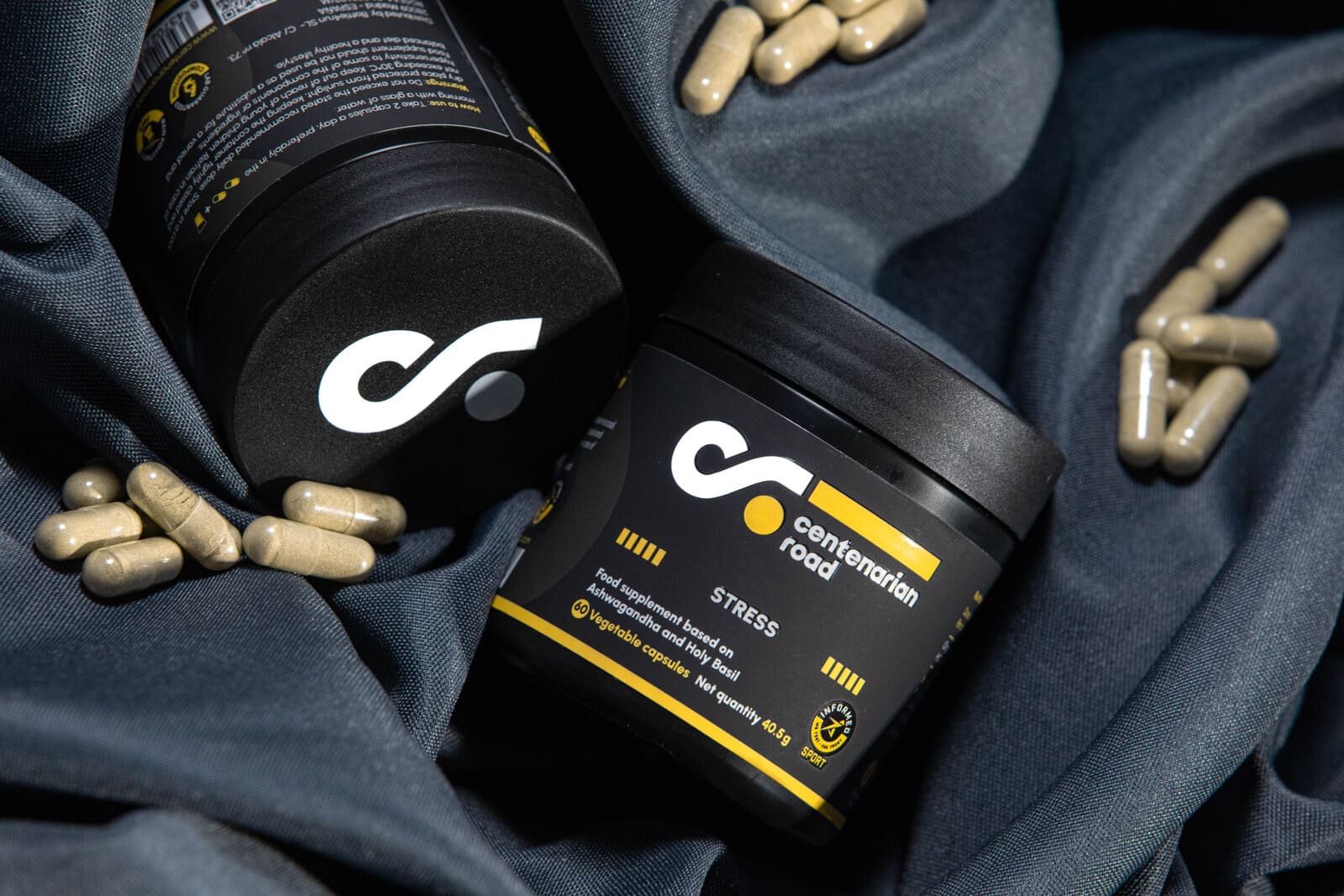
Centenarian Road Joint Supplement provides the following daily amounts:
Provided as glucosamine sulfate.
DROI-KON® chondroitin sulfate.
CURSOL® extract providing 105 mg of declared curcumin.
Black pepper extract standardised in piperine.
Turmeric has also been studied in people with knee osteoarthritis due to its potential relationship with pain, stiffness and function. However, recent reviews highlight that the overall methodological quality of part of this research remains limited.
View Joint with Glucosamine, Chondroitin and Turmeric
Hydrolyzed Collagen: A Connective Tissue-Focused Option
Collagen is a structural protein found in tissues such as cartilage, tendons, ligaments and bones.
Most collagen supplements use hydrolyzed collagen, meaning the collagen has been broken down into smaller peptides that are easier to incorporate into a supplement format.
Research on hydrolyzed collagen and joint health has shown positive findings in some studies related to discomfort, physical function and mobility, particularly among individuals with joint concerns or osteoarthritis. However, there is considerable variation between formulations, doses and populations studied, so results should not be interpreted as guaranteed.
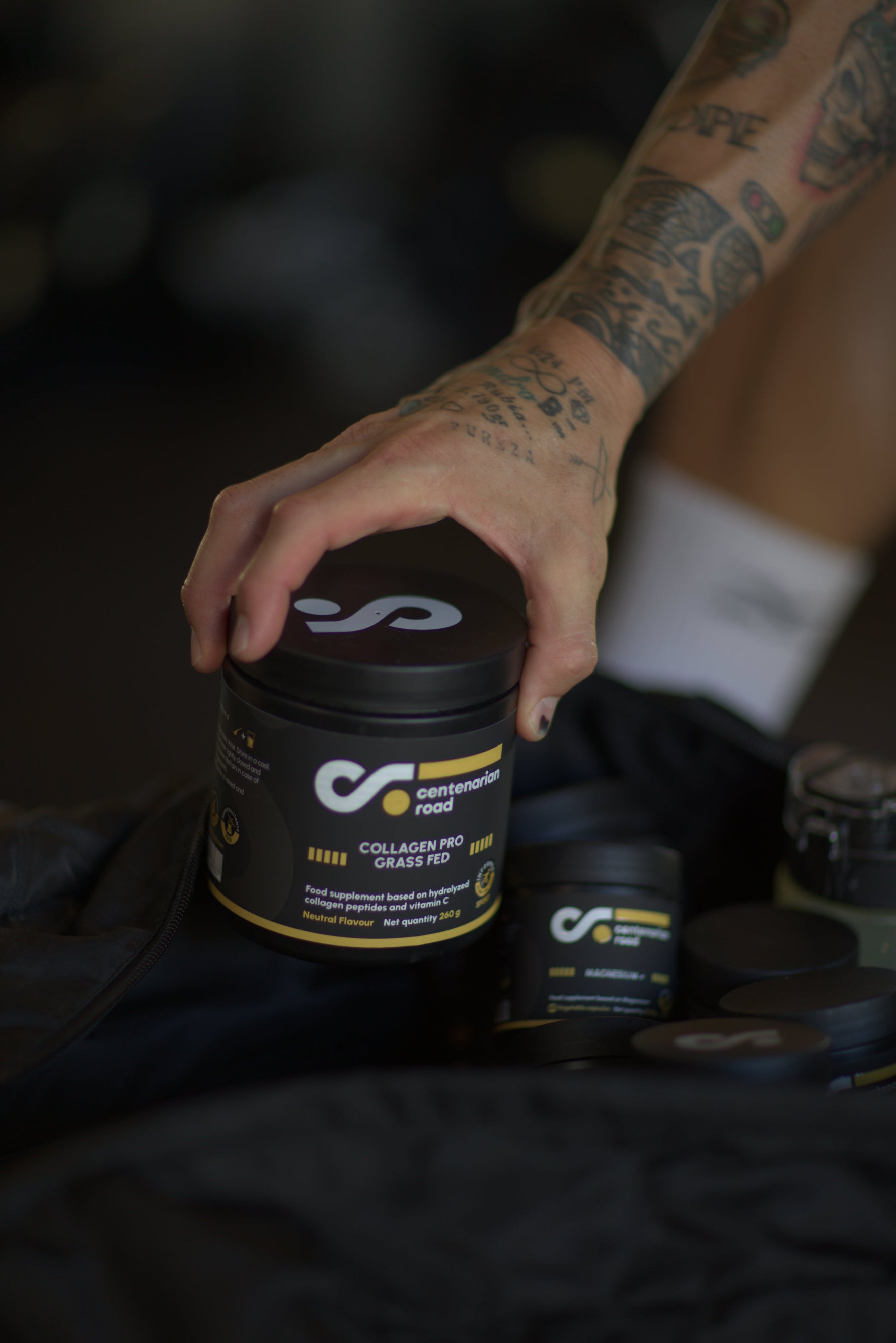
Centenarian Road Hydrolyzed Collagen Powder provides 10 g of hydrolyzed collagen per serving together with 80 mg of vitamin C.
Vitamin C has a particularly clear role in this context: it contributes to normal collagen formation for the normal function of cartilage and bones.
View Hydrolyzed Collagen with Vitamin C
Joint Supplement, Collagen or a Combination of Both?
The main difference lies in the focus of each formula.
A better fit when you are looking for a formula specifically focused on joint support with glucosamine, chondroitin and turmeric.
May be more suitable when you want to include collagen peptides and vitamin C within a connective tissue support strategy.
Combines both approaches and adds hyaluronic acid for a broader joint-focused supplementation strategy.
The Skin & Joint Health Pack currently combines:
- 10 g of hydrolyzed collagen with vitamin C.
- 1,000 mg of glucosamine sulfate.
- 700 mg of chondroitin sulfate.
- 500 mg of turmeric extract.
- 200 mg of hyaluronic acid.
Oral hyaluronic acid has also been studied in people with osteoarthritis. A systematic review published in 2024 found favourable results in several studies related to pain, stiffness and physical function, although research in this area remains more limited compared with other joint health interventions.

What to Consider Before Buying a Joint Mobility Supplement
When comparing products, it is more useful to look at the actual formulation rather than focusing only on general labels such as “joint support” or “mobility”.
Check which ingredients are included and the amount provided in the daily serving.
Supporting cartilage with a joint-focused formula is different from choosing collagen peptides for connective tissue support.
Research on joint supplements usually evaluates periods of several weeks or months rather than immediate effects.
If you take medication or have a diagnosed condition, review the formula with a healthcare professional before use.
In particular, glucosamine and chondroitin may require additional consideration in certain situations. Possible interactions have been reported with anticoagulant medications such as warfarin, so professional advice should be sought before use in these cases.
Frequently Asked Questions About Joint Mobility Supplements
There is no universally superior formula. If you are looking for a joint-focused combination, glucosamine, chondroitin and turmeric represent a commonly used approach. If you also want collagen and hyaluronic acid, a combined pack may cover additional components related to connective tissue. The best choice depends on your goals, the formulation and your individual context.
Joint stiffness can have many different causes, so supplements should not be used to self-diagnose the issue. Glucosamine and chondroitin have mainly been studied in relation to osteoarthritis and joint function, while hydrolyzed collagen has also been researched for discomfort and mobility. If stiffness is frequent, worsening or affecting movement, identifying the underlying cause is important.
They are not equivalent. Collagen provides peptides derived from a structural connective tissue protein. Glucosamine and chondroitin are compounds associated with cartilage components and have mainly been studied in osteoarthritis. The choice depends on your objective, and both approaches may also be part of a broader strategy.
Research has mainly focused on people with osteoarthritis, particularly knee osteoarthritis. Some studies have reported improvements in discomfort or physical function, while others have not found significant differences. Current evidence remains inconsistent, and results cannot be guaranteed for everyone.
Some clinical trials and reviews have reported improvements in discomfort, physical function or mobility in certain populations using hydrolyzed collagen. However, formulations, doses and study groups vary considerably, so results should not automatically be applied to every collagen supplement.
Knee discomfort can have many different causes, including training overload, injury, osteoarthritis or other conditions. Studies on knee osteoarthritis have explored glucosamine, chondroitin, curcumin, hydrolyzed collagen and oral hyaluronic acid, with different levels of evidence. If discomfort persists or affects daily activities, understanding the cause should be the priority rather than relying only on supplementation.
You should not expect immediate effects. Studies investigating glucosamine, chondroitin, collagen peptides, curcumin or hyaluronic acid usually evaluate outcomes after several weeks or, in some cases, months. The timeframe observed in research does not guarantee that every individual will experience changes within the same period.
These are different ingredients and some products combine them in the same formula. However, using several supplements at the same time increases the number of ingredients and dosages that need to be reviewed. It is important to check the total intake and consider possible contraindications, especially when taking medication.
It should not be claimed that a food supplement can independently regenerate damaged cartilage. Available research mainly evaluates outcomes such as discomfort, stiffness or physical function, and results depend on the specific ingredient and the population studied.
Conclusion: Choose a Joint Supplement Based on Your Goal, Not Just the Label
If you are looking for a joint mobility supplement, there is no single option that is suitable for everyone.
A joint-focused formula such as Centenarian Road Joint Supplement focuses on glucosamine, chondroitin and turmeric. Hydrolyzed collagen provides collagen peptides and vitamin C as part of a connective tissue support strategy. The Skin & Joint Health Pack combines both approaches together with hyaluronic acid.
The evidence surrounding joint supplements varies, and no product should be presented as being able to regenerate a joint or independently solve discomfort, stiffness or reduced mobility.
The most suitable supplement is the one that matches a specific need, provides clearly declared ingredients and quantities, and forms part of a wider strategy that includes movement, strength training, appropriate load management and professional assessment when persistent discomfort exists.
Scientific References and Sources
National Center for Complementary and Integrative Health. Glucosamine and Chondroitin for Osteoarthritis: What You Need To Know.
Official review of evidence regarding glucosamine and chondroitin for osteoarthritis, including inconsistent findings and differences between clinical guidelines.
NCCIH
García-Coronado JM et al. Analgesic efficacy of collagen peptide in knee osteoarthritis: a meta-analysis of randomized controlled trials.
Meta-analysis of randomized controlled trials examining collagen peptides and discomfort outcomes in knee osteoarthritis.
PubMed PMID: 37717022
The Effects of Type I Collagen Hydrolysate Supplementation on Bones, Muscles, and Joints: A Systematic Review. 2025.
Systematic review of clinical trials investigating type I hydrolyzed collagen supplementation. Joint studies reported favourable findings in some discomfort and mobility-related outcomes, although variability existed between studies.
PubMed PMID: 39980497
de Carvalho JF, Davidson J. Oral Hyaluronic Acid in Osteoarthritis and Low Back Pain: A Systematic Review. 2024.
Systematic review examining oral hyaluronic acid supplementation and outcomes related to discomfort, stiffness and physical function.
PubMed PMID: 39886281
Chen et al. A critical review of systematic reviews and meta-analyses of curcumin for knee osteoarthritis. 2026.
Critical review highlighting methodological limitations and the quality of evidence regarding curcumin supplementation for knee osteoarthritis.
PubMed PMID: 41560742