









Supplements for tendons and ligaments are increasingly used by athletes, active individuals and people interested in supporting connective tissue health as they age.
However, it is important to distinguish between what a supplement may contribute and what depends mainly on training, load management, recovery and overall lifestyle habits.
Tendons and ligaments are connective tissues with a different structure and function compared with muscle. For this reason, supplements aimed at these tissues do not have exactly the same purpose as sports protein supplements designed to support muscle maintenance.
Which Supplements Support Tendons and Ligaments?
The supplements most commonly studied in relation to tendons and ligaments include hydrolyzed collagen peptides, vitamin C and certain nutrients involved in connective tissue health.
The goal is not to “repair” a tendon through supplementation alone, but rather to provide specific nutrients that may form part of a broader strategy alongside appropriate exercise and adequate recovery.
One of the most researched supplements in relation to tendons and collagen-rich structures.
Contributes to normal collagen formation within the body.
Studied for its relationship with general health and inflammatory processes.
Nutrients such as magnesium and zinc contribute to various physiological functions.
Collagen: The Supplement Most Associated With Tendons and Ligaments
Collagen is the most abundant structural protein found in connective tissue.
Tendons, ligaments, cartilage and other structures contain significant amounts of collagen, which is why collagen supplementation has received growing attention in sports nutrition and healthy ageing research.
How May Collagen Support Connective Tissue?
Current research has mainly explored the use of collagen peptides combined with exercise, particularly resistance training or other forms of mechanical loading applied to connective tissues.
Some studies have observed changes related to collagen metabolism markers and connective tissue adaptations. However, these findings should always be interpreted within the wider context of training, nutrition and recovery.
Structures with a high concentration of collagen that respond to appropriate mechanical stimulation from exercise.
Collagen represents an important component of their structural framework.
Connective tissues contribute to joint stability and normal function.
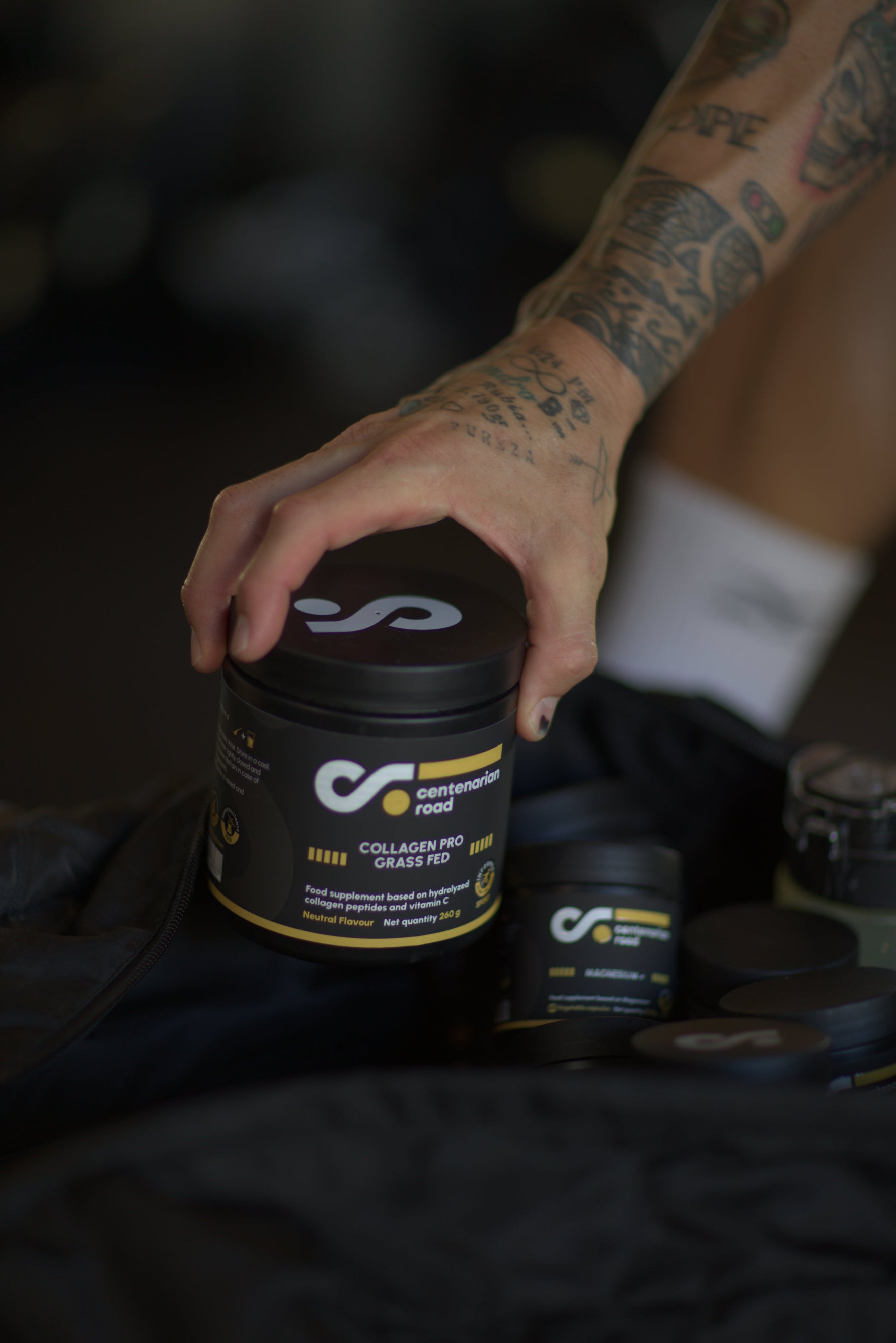
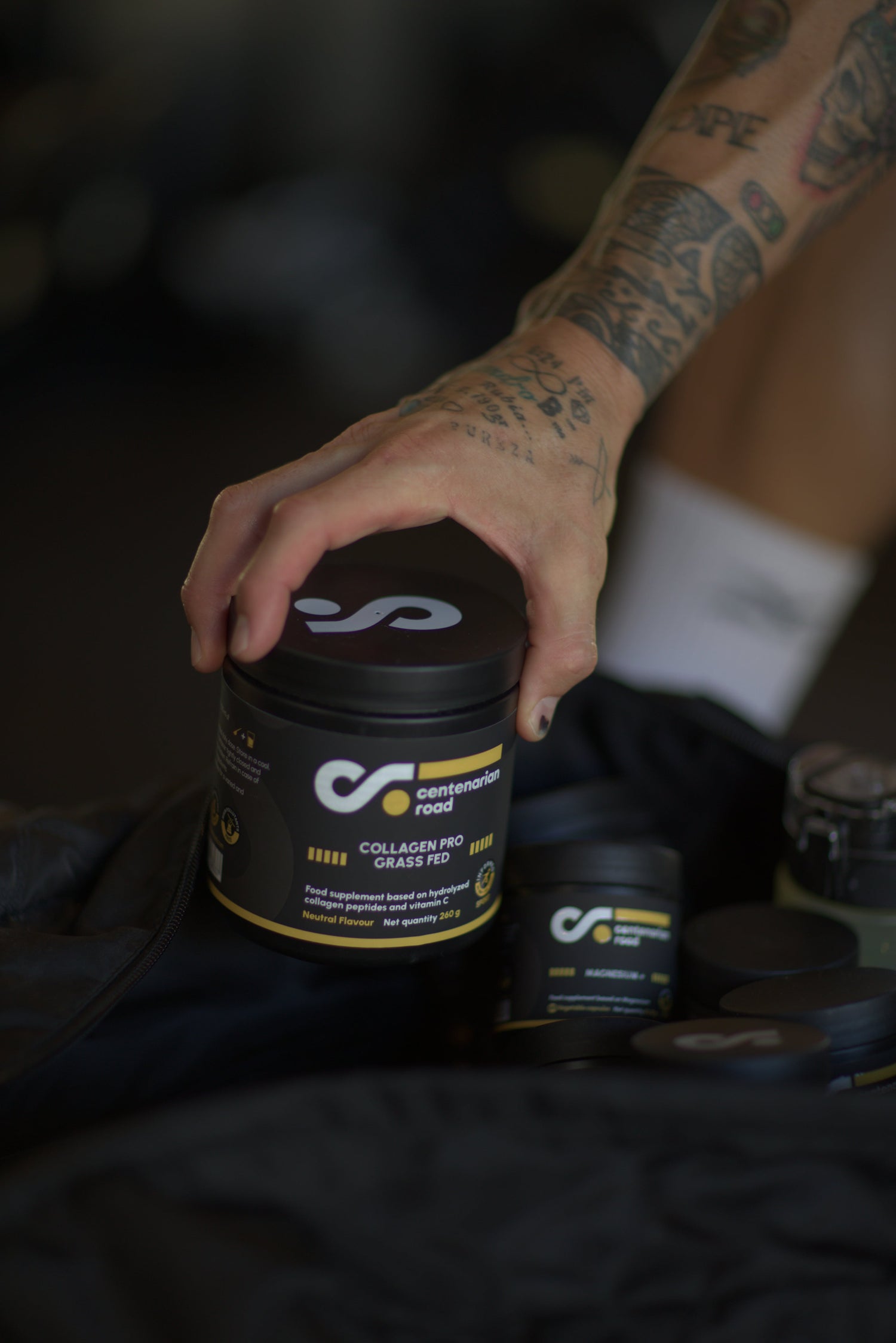
Centenarian Road Hydrolyzed Collagen Powder provides hydrolyzed collagen together with vitamin C, designed to complement a strategy focused on connective tissue support.
View Hydrolyzed Collagen Powder
Vitamin C: A Key Nutrient for Normal Collagen Formation
Vitamin C contributes to normal collagen formation, which is important for the normal function of cartilage, bones and skin.
For this reason, many collagen supplements include vitamin C as part of their formulation.
This does not mean that consuming high doses of vitamin C will regenerate an injured tendon. However, maintaining adequate vitamin C intake is part of supporting normal connective tissue nutrition.
Other Supplements Related to Tendons and Ligaments
Omega-3
Omega-3 fatty acids EPA and DHA are studied for their relationship with different physiological processes throughout the body.
Their role in connective tissue and joint health should be understood as part of an overall nutritional strategy, not as a specific supplement designed to rebuild tendons or ligaments.
Magnesium and Essential Minerals
Minerals such as magnesium contribute to numerous physiological functions related to muscle function, energy metabolism and overall health.
However, they should not be considered targeted supplements for repairing tendons or ligaments unless there is a specific nutritional need.
Glucosamine and Chondroitin
These compounds are commonly found in joint-support supplements. However, research around them mainly focuses on cartilage and osteoarthritis rather than specifically on tendons and ligaments.
What Else Can You Do Besides Taking Supplements to Support Tendons and Ligaments?
Supplements may complement a strategy, but connective tissues require appropriate stimuli to adapt and remain resilient.
Tendons respond to progressive and well-managed loading over time.
Increasing training volume or intensity too quickly may increase the likelihood of discomfort.
Proper nutrition helps provide the building blocks required by the body.
Rest and recovery are essential parts of tissue adaptation.

Frequently Asked Questions About Supplements for Tendons and Ligaments
Hydrolyzed collagen is one of the most studied supplements in relation to connective tissue, especially when combined with appropriate exercise.
Some studies have observed interesting effects when collagen peptides are combined with exercise. However, collagen should not be considered a replacement for training or an immediate solution for injuries.
It depends on the goal. Whey protein is mainly used to help meet muscle protein requirements, while collagen is more closely associated with collagen-rich connective tissues such as tendons and ligaments.
Vitamin C contributes to normal collagen formation, making it an important nutrient within a balanced diet that supports connective tissue health.
No. Recovery from an injury depends on multiple factors, including diagnosis, appropriate treatment, exercise management and recovery time.
Conclusion: Tendon and Ligament Health Requires a Complete Strategy
Supplements for tendons and ligaments can be a useful tool within a connective tissue support strategy, but they do not replace appropriate training or healthy lifestyle habits.
Hydrolyzed collagen combined with vitamin C is one of the most commonly used and researched approaches in this area.
Other nutrients such as omega-3 fatty acids or minerals may contribute to overall nutrition, but they should not be presented as specific solutions for tendon repair.
The most effective strategy combines:
Applying progressive training stimuli adapted to the capacity of the tissue.
Providing sufficient protein and essential micronutrients.
Allowing the body to adapt to training demands.
The goal is not to search for a miracle supplement, but to provide the body with the right tools to help maintain strong and functional connective tissues over time.
Scientific References and Sources
Shaw G. et al. Vitamin C-enriched gelatin supplementation before intermittent activity enhances collagen synthesis. American Journal of Clinical Nutrition. 2017.
Study examining gelatin, vitamin C and exercise-related collagen synthesis.
PubMed PMID: 27852613
Clifford T. et al. The effects of collagen peptides on muscle damage and recovery. Current Opinion in Clinical Nutrition and Metabolic Care.
Review exploring collagen peptides and different applications related to exercise and recovery.
NIH Office of Dietary Supplements — Vitamin C Fact Sheet.
Official information about vitamin C functions and its relationship with normal collagen formation.
NIH Office of Dietary Supplements