










Sports supplements after 40 are becoming increasingly popular among people who want to maintain strength, muscle mass, recovery capacity and athletic performance as they get older.
However, turning 40 does not automatically mean your body requires a completely new supplement routine. There is no exact physiological point where taking creatine, protein, collagen, magnesium or omega-3 suddenly becomes necessary.
What can gradually change is the importance of paying closer attention to protein intake, resistance training, energy availability, recovery, connective tissue health and potential nutritional gaps.
For this reason, the most useful question is not “Which supplements should I take after turning 40?” but rather: “What specific need am I trying to address, and is there a supplement with enough scientific support to help?”
What Really Changes When You Train After 40
Athletic ageing is a gradual process influenced by much more than chronological age. Training history, sport type, body composition, nutrition, sleep, exercise volume and overall health can create major differences between two people of the same age.
It is also important to interpret scientific research correctly. Many studies exploring muscle ageing and supplementation are not performed specifically on athletes between 40 and 50 years old, but rather on older adults, often aged 60 and above.
Therefore, results observed in sedentary adults in their seventies should not automatically be applied to a well-trained 42-year-old athlete.
Maintaining adequate resistance training stimulus and sufficient protein intake becomes increasingly important over time.
Training volume, sleep quality, rest periods and energy availability influence how effectively you recover between sessions.
Tendons and other structures experience repeated loading over years and require attention beyond muscle development.
Protein, carbohydrates, healthy fats, micronutrients and sufficient energy remain the foundation before considering supplementation.
Resistance training continues to be one of the most important tools for maintaining muscular function throughout life. Supplements can complement this strategy, but they cannot replace consistent training and proper nutrition.
Which Supplements Are Worth Considering After 40?
Not all supplements offer the same value or the same level of scientific evidence. The right choice depends on your training goals, your current diet and whether your nutritional foundations are already covered.
Protein: First, Meet Your Daily Requirements
Protein powder does not become mandatory once you reach 40. The priority is achieving an appropriate total protein intake throughout the day.
For physically active individuals, sports nutrition recommendations commonly place protein intake around 1.4 to 2.0 grams per kilogram of body weight per day, although requirements vary depending on training type, goals, energy availability and individual characteristics.
For example, someone weighing 75 kg would typically require approximately 105-150 grams of protein per day within this range.
Foods such as meat, fish, eggs, dairy products, legumes, soy and other protein sources can cover a significant portion — or even all — of these requirements.
A whey protein supplement can be particularly useful when reaching your daily protein target through food alone becomes inconvenient or impractical.
Provides a practical way to increase protein intake without preparing an additional full meal.
Useful when a protein-rich meal is not available shortly after training.
Helps achieve elevated protein targets without significantly increasing total food volume.
Centenarian Road Native Whey Protein Isolate provides 31.5 g of protein per serving and can be used as a practical tool to help complete daily protein intake.
View Native Whey Protein Isolate
Creatine: One of the Most Researched Options in Sports Nutrition
Creatine monohydrate is one of the most extensively studied performance supplements available. It has particular relevance for activities that require strength, power or repeated high-intensity efforts.
Creatine increases the availability of phosphocreatine in muscle, which is used to help regenerate ATP — the primary energy source for short, intense physical efforts.
It has also been widely studied alongside resistance training in older adults, with research showing interesting findings related to strength development and muscle function.
However, context matters. Many of these studies include individuals considerably older than 40. Therefore, it cannot be concluded that someone needs creatine simply because they have reached a certain age.
A common approach is to consume approximately 3-5 g of creatine monohydrate daily. Some protocols include a loading phase, although it is not essential to gradually increase muscle creatine stores.
View Creatine Monohydrate Creapure®
Collagen: A Different Goal From Muscle Protein
Whey protein and collagen should not be considered interchangeable.
When the primary goal is meeting protein requirements to maintain or develop muscle, a complete protein source rich in essential amino acids has greater relevance.
Collagen is studied in a different context, particularly in relation to tendons and other components of connective tissue.
Research has explored whether collagen peptides combined with exercise may support certain tendon adaptations. However, this does not make collagen a replacement for complete protein sources designed to support muscle protein needs.
Provides all essential amino acids required for muscle protein synthesis and maintenance.
Sports research has focused mainly on tendons and other connective tissue structures.
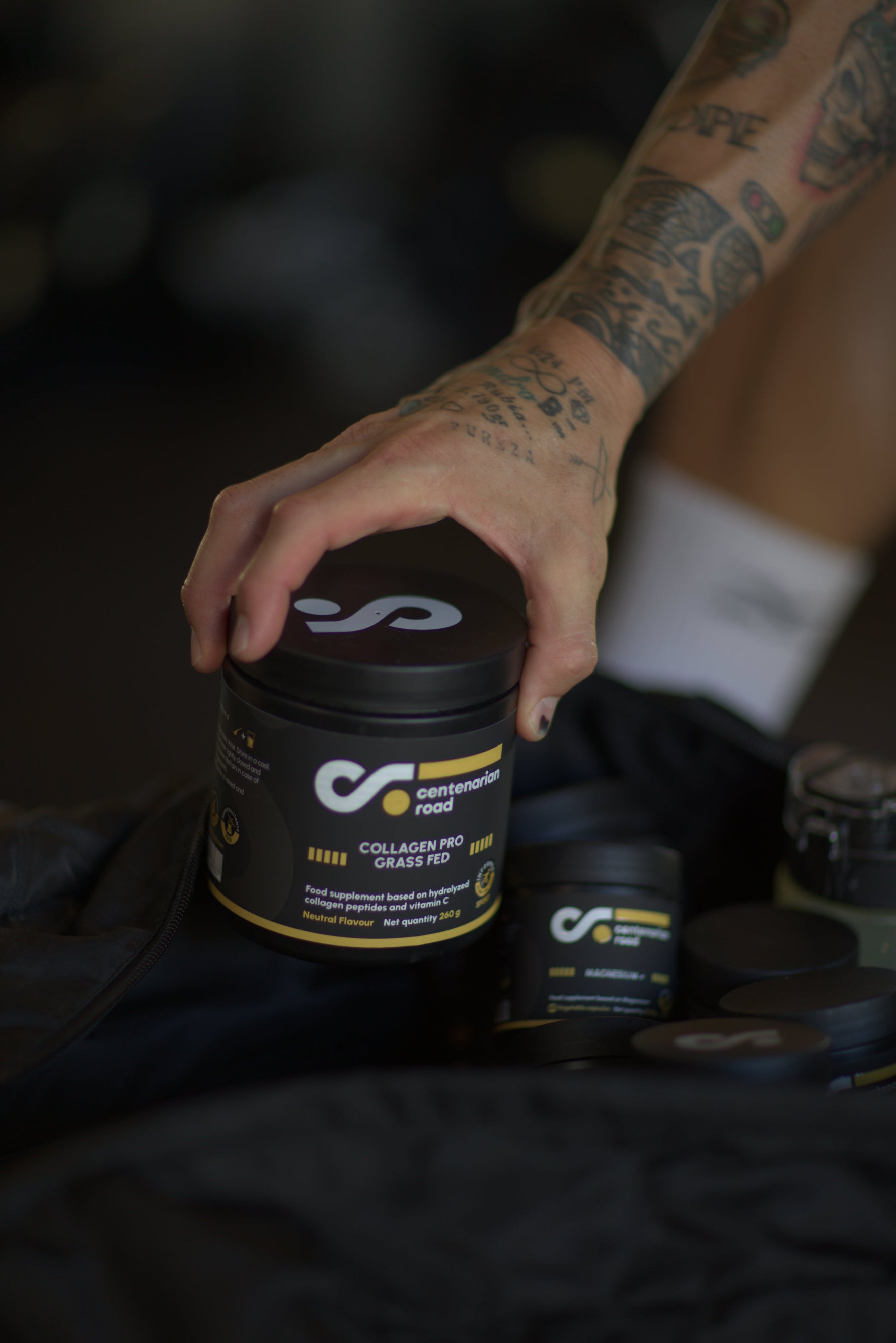
Centenarian Road Hydrolyzed Collagen Powder provides 10 g of hydrolyzed collagen per serving and vitamin C.
Vitamin C contributes to normal collagen formation for the normal function of cartilage and bones. However, supplementation does not replace the mechanical stimulus required for these tissues to adapt to training.
Omega-3, Magnesium and Vitamin D: Not Automatically Required Because of Age
Omega-3, magnesium and vitamin D play important physiological roles, but this does not mean every athlete over 40 needs to supplement with them.
For omega-3, the first step is assessing whether your diet already includes sufficient sources of EPA and DHA through foods such as oily fish.
For magnesium, dietary intake and individual factors that may contribute to insufficient levels should be considered first. Being an essential mineral does not mean additional supplementation automatically improves performance.
For vitamin D, being over 40 does not automatically indicate a deficiency. Sun exposure, season, diet and individual characteristics all influence vitamin D status.
When there is a suspected deficiency, specific nutritional need or professional recommendation, supplementation may be considered on an individual basis.
Where Do BCAAs Fit In?
BCAAs — leucine, isoleucine and valine — are involved in muscle metabolism, but they do not automatically become necessary after turning 40.
Muscle protein synthesis requires a complete range of essential amino acids. If your diet already provides enough high-quality protein, isolated BCAAs generally have a lower priority compared with meeting total protein intake, energy needs, training requirements and recovery demands.
What to Prioritize According to Your Type of Training
A strength athlete, runner, cyclist and recreational padel player do not necessarily need the same supplementation strategy. Before choosing supplements, it is important to understand the actual demands of your sport.
Adequate protein intake and creatine monohydrate may be key priorities. Other supplements depend on diet and individual needs.
Energy availability, carbohydrate intake, hydration and recovery usually take priority before adding multiple supplements.
Football, padel, tennis, CrossFit and combat sports combine strength, power and endurance demands and require a more personalised approach.
Beyond muscle, training load management and connective tissue health may also deserve attention.
For this reason, creating a single “over 40 supplement stack” oversimplifies a reality where training type may be more important than chronological age.
What to Check Before Buying a Supplement
The best way to prioritise supplements is to first make sure the fundamentals are already covered. Adding products to an inconsistent training or nutrition strategy rarely addresses the real limiting factor.
Make sure you are eating enough to support your training volume, frequency and overall activity level.
Check whether you consistently reach an appropriate protein intake based on your body weight, activity and goals.
Adjust carbohydrate intake according to training intensity, duration and frequency.
A suitable training stimulus and progressive overload remain essential for long-term adaptation.
Sleep quality, rest between sessions and fatigue management are key parts of any performance strategy.
Only after these foundations are addressed should you consider which supplement may solve a specific need.
As we get older, medication use and possible interactions may also become increasingly relevant.
Someone taking medication for blood pressure, anticoagulation, diabetes, cholesterol or other health conditions should not automatically copy another athlete’s supplementation protocol.
When regular medication or a specific medical condition is involved, it is advisable to review supplementation choices with a healthcare professional.
For athletes subject to anti-doping testing, product quality and traceability should also be considered. Independent certifications related to prohibited substances may provide an additional layer of quality control by reducing certain contamination risks, although these certifications refer to testing and manufacturing controls, not supplement effectiveness.

Frequently Asked Questions About Sports Supplementation After 40
There is no universal combination that applies to everyone. Protein and creatine may be particularly relevant when the goal includes maintaining muscle mass, strength and performance, while other supplements should be considered according to diet, sport type and individual needs.
Creatine monohydrate has extensive research supporting its role in strength, power and repeated high-intensity efforts. It has also been studied alongside resistance training in older adults, although it is not required simply because someone reaches 40.
A common approach is approximately 3-5 g of creatine monohydrate daily. A loading phase can accelerate muscle saturation, but it is not essential.
No. Protein powder is simply a practical tool to help complete protein intake when reaching daily requirements through food alone is difficult or inconvenient.
They serve different purposes. Protein provides amino acids needed for maintaining and building tissues, while creatine supports energy availability during certain types of intense exercise. They can complement each other when appropriate.
No. Collagen has a different amino acid profile and sports research has mainly focused on connective tissue. It should not replace a complete protein source when the primary goal is meeting muscle protein requirements.
Not solely because of age. Supplementation should be considered according to diet, sun exposure, individual requirements, relevant testing and professional guidance when needed.
No. When sufficient complete protein is already consumed through the diet, BCAAs generally have a lower priority compared with meeting total protein, energy requirements, training and recovery needs.
Conclusion: After 40, Prioritisation Matters More Than Accumulation
Sports supplementation after 40 should be based on your actual training demands and nutritional needs, not on a generic list linked only to age.
Creatine monohydrate may be particularly useful when the goal involves strength, power or repeated high-intensity performance. Whey protein can make it easier to achieve adequate protein intake when food alone is not sufficient or practical.
Collagen serves a different purpose, mainly related to connective tissue, while omega-3, magnesium and vitamin D should be considered according to dietary intake and individual circumstances.
Before adding secondary supplements, it is worth confirming that the fundamentals are covered: sufficient energy intake, adequate protein, appropriate carbohydrate availability, resistance training, sleep and recovery.
Ultimately, continuing to train after 40 does not require taking more supplements. It requires understanding what your body actually needs and choosing only the tools that have a clear purpose.
Scientific References and Sources
Jäger R. et al. International Society of Sports Nutrition Position Stand: Protein and Exercise. Journal of the International Society of Sports Nutrition. 2017.
Position paper covering protein requirements in physically active individuals, protein distribution and the relationship between protein intake and exercise.
PubMed PMID: 28642676
Desbrow B. et al. Protein Requirements for Master Athletes: Just Older Versions of Their Younger Selves? Sports Medicine. 2021.
Review focused on protein requirements in master athletes and the specific challenges of combining ageing with sports performance.
Nguyen C. et al. Effects of Supplementation in Masters Athletes and Older Adults: A Narrative Review. Current Sports Medicine Reports. 2026.
Review examining supplementation strategies in master athletes and older adults, including limitations in available evidence for veteran athletes.
PubMed PMID: 42385164
Age-related anabolic resistance and post-absorptive muscle protein synthesis: integrative evidence from a systematic review and meta-analysis. 2026.
Systematic review exploring age-related differences in muscle protein synthesis response and exercise adaptation.
PubMed PMID: 42326998
Effects of resistance training combined with creatine supplementation on muscle strength, physical function, and muscle mass in older adults. 2026.
Meta-analysis examining resistance training combined with creatine supplementation in older adults.
PubMed PMID: 42712402
Collagen Supplementation on Tendon-Related Structural and Performance Outcomes: A Systematic Review. 2026.
Systematic review examining collagen supplementation and tendon-related adaptations.
PubMed PMID: 41900537
NIH Office of Dietary Supplements — Dietary Supplements for Exercise and Athletic Performance.
Official reference covering creatine, proteins, amino acids and other ingredients commonly used in sports supplementation.
NIH Office of Dietary Supplements