








Understanding type I, II and III collagen can be confusing because the number alone does not tell you whether one type is “better” than another. Each type is found predominantly in different tissues, and when it comes to supplementation, the source and form of collagen matter just as much as the type itself.
Type I collagen is particularly abundant in the skin, bones, tendons and ligaments; type II is closely associated with cartilage; and type III is commonly found alongside type I in several types of connective tissue.
That is why a more useful question than “Which collagen is best?” is: what is my goal, and which form of collagen has actually been studied for that purpose?
Differences between type I, II and III collagen
The collagen family includes many different types. Types I, II and III are among the best known because they play major structural roles in several tissues throughout the body.
One of the body's main structural collagens. It is especially abundant in the skin, bones, tendons and ligaments.
Found predominantly in cartilage. In supplements, it is important to distinguish between hydrolysed type II collagen and undenatured type II collagen.
Often found alongside type I collagen in connective tissues, particularly in structures that require both support and flexibility.
Two products labelled as collagen supplements may behave very differently depending on whether the collagen is hydrolysed or undenatured, the amount provided and the raw material used.
Type I collagen: skin, bones, tendons and ligaments
Type I collagen is an important component of tissues that regularly withstand mechanical stress. It contributes to the structural matrix of the skin, bones, tendons and ligaments.
For this reason, many hydrolysed collagen peptide supplements studied in relation to skin and musculoskeletal tissues are made from raw materials that are rich in type I collagen.
This does not mean that type I collagen molecules travel intact from a supplement directly to the skin or tendons. During digestion, hydrolysed collagen is broken down further into smaller peptides and amino acids that can be absorbed and used as part of normal metabolism.
Several studies investigating skin health have reported favourable changes in measures such as hydration and elasticity following supplementation with hydrolysed collagen. However, outcomes can vary depending on the specific product, dose, duration of use and individual characteristics.
Type II collagen: the collagen most closely associated with cartilage
Type II collagen is particularly important in articular cartilage. This is why it frequently appears in supplements and scientific studies focused specifically on joint health.
There is an important distinction that is often overlooked in commercial comparisons: hydrolysed type II collagen and undenatured type II collagen are not the same ingredient.
The protein has been broken down into smaller peptides through hydrolysis. From a nutritional perspective, it behaves more like other hydrolysed collagen ingredients.
It retains more of its original protein structure and is researched through mechanisms that differ from those associated with hydrolysed collagen peptides.
Research into undenatured type II collagen in people with knee-related complaints has produced promising findings in some trials. However, scientific reviews also point out that larger and higher-quality studies are still needed before stronger conclusions can be drawn.
For that reason, someone whose main goal is cartilage support should not choose a supplement simply because the word “collagen” appears on the label. It is important to check which type of collagen it contains, the form in which it is provided and the amount used for that specific ingredient.
Type III collagen: commonly found alongside type I
Type III collagen is frequently found together with type I in several connective tissues. As a result, many bovine-derived collagen ingredients may provide predominantly type I collagen alongside smaller amounts of type III.
It should not be interpreted as a type of collagen dedicated to one particular organ, nor as something that necessarily needs to be supplemented separately. When a collagen ingredient contains both types I and III, it makes more sense to assess the complete formulation, the quality of the peptides, the dose and the available scientific evidence.
Which type of collagen should you choose for your goal?
There is no single type of collagen that is universally superior. The right choice depends on the objective and, above all, on the actual collagen ingredient used in the supplement.
Hydrolysed collagen peptides rich in type I are among the most widely studied forms when the nutritional goal involves the skin and other connective tissues.
Type II collagen becomes particularly relevant. If you are specifically looking for undenatured type II collagen, make sure the label clearly identifies it as such.
Type I collagen is a major component of the organic bone matrix, although bone health also depends on exercise, diet and an adequate supply of other nutrients.
These tissues are rich in type I collagen. Collagen peptides have been studied in this context as part of broader strategies that also include exercise and adequate protein intake.
A hydrolysed collagen ingredient composed predominantly of type I with some type III may fit a broader connective tissue strategy.
A supplement cannot replace medical diagnosis or treatment. Persistent pain, swelling or reduced mobility should be assessed by a qualified healthcare professional.
If your main goal is skin and connective tissue
Hydrolysed collagen peptides are the form most commonly used in oral supplementation studies focused on skin-related outcomes. A systematic review and meta-analysis of clinical trials reported improvements in skin hydration and elasticity, although limitations and potential sources of bias were also identified.
In this context, a formulation based predominantly on type I collagen may make sense as part of a wider nutritional strategy rather than as a standalone solution.
If your main goal is cartilage and joint health
When the focus is specifically on joints, it is useful to separate two different approaches. Hydrolysed collagen peptides are generally consumed in gram-level amounts and have been investigated across several musculoskeletal contexts. Undenatured type II collagen, on the other hand, is studied at much smaller amounts and follows a different nutritional rationale.
It therefore makes little sense to compare the two simply by looking at the number of grams per serving. They are different ingredients and should be assessed according to their form, researched dose and intended use.

Hydrolysed vs undenatured collagen: why the form matters as much as the type
One of the most common mistakes when comparing collagen supplements is focusing only on whether they contain type I, II or III. In reality, the form of the collagen ingredient is just as important.
Collagen is processed through hydrolysis to produce smaller peptides. It is commonly supplied as a powder and usually consumed in gram-level daily amounts.
These are fragments derived from collagen that are further digested and absorbed as small peptides and amino acids.
It retains a structure that is closer to the original protein and is particularly relevant in research involving undenatured type II collagen.
Rather than relying on a large number on the front of the label, look at the specific ingredient, its dose and the scientific evidence supporting its use.
This is why questions such as “Is type I collagen better than type II?” are incomplete. A hydrolysed type I collagen product and an undenatured type II collagen product may serve different purposes and should not be treated as interchangeable.
Collagen Pro Grass Fed: when it may fit your goals
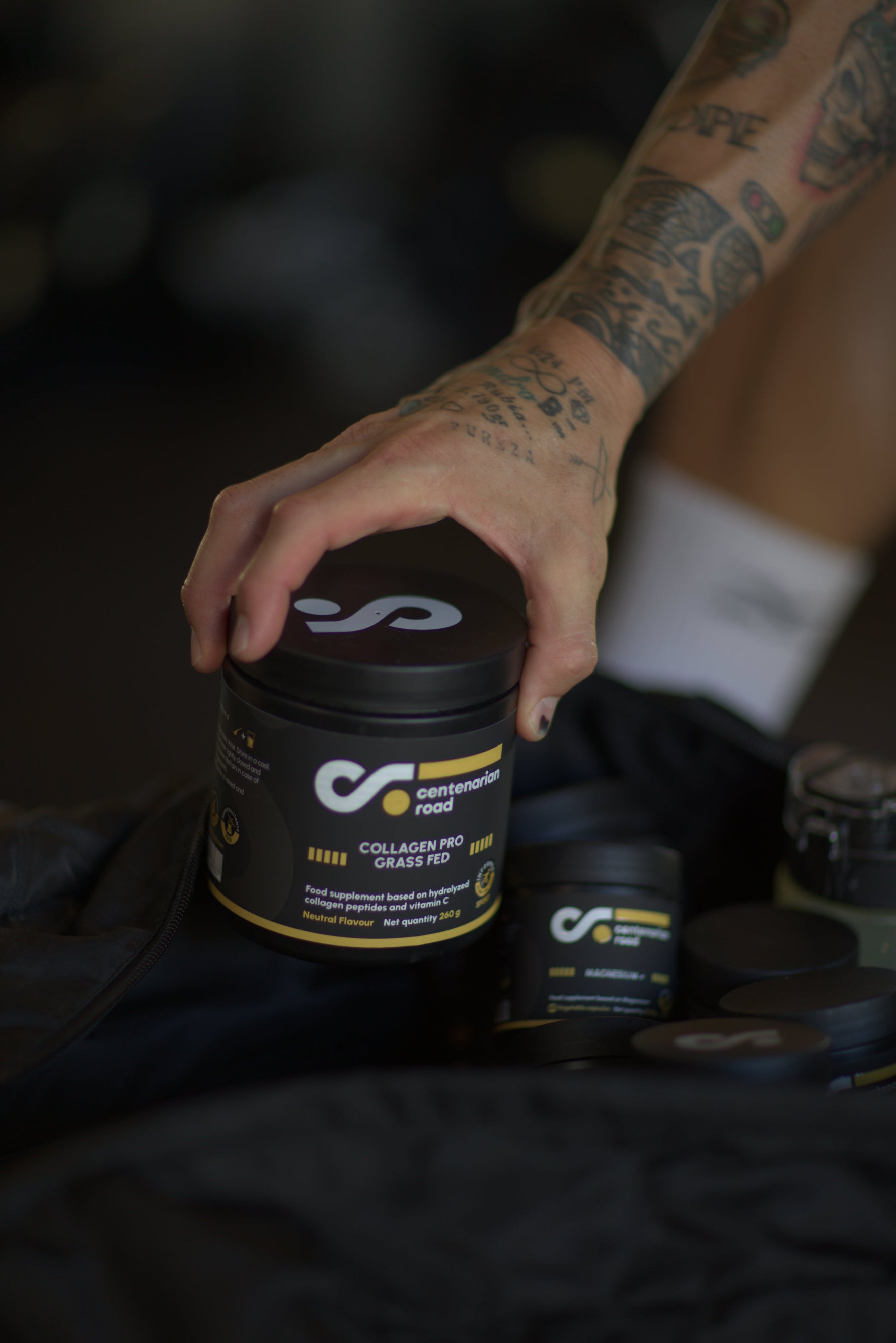
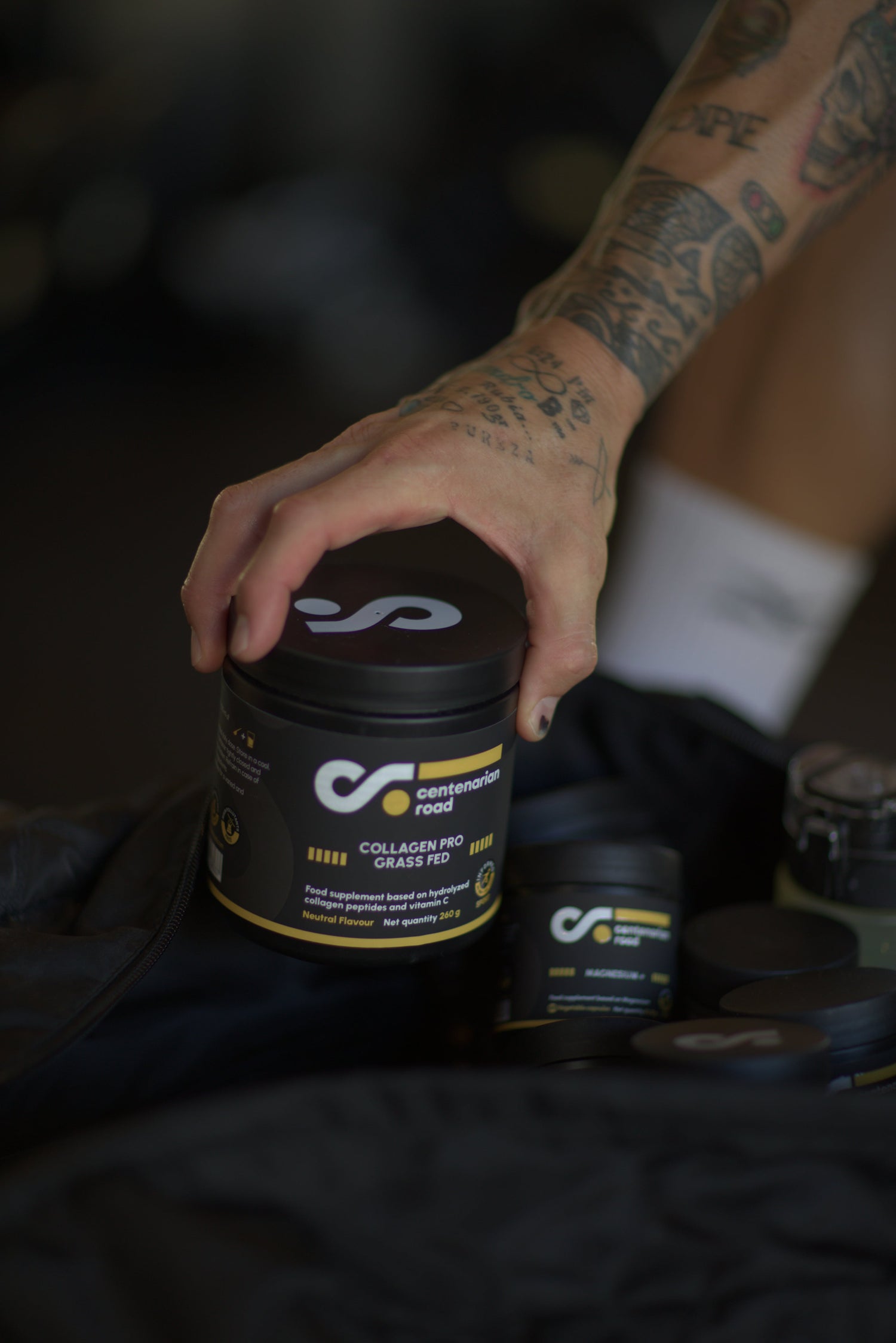
Collagen Pro Grass Fed by Centenarian Road contains SOLUGEL® ULTRA BD, a hydrolysed collagen peptide ingredient. According to the manufacturer of SOLUGEL®, it consists predominantly of type I collagen with traces of type III.
Each daily serving provides 10 g of grass-fed hydrolysed collagen SOLUGEL® ULTRA BD and 80 mg of vitamin C. Vitamin C contributes to normal collagen formation for the normal function of bones, cartilage and skin, in accordance with authorised health claims in the European Union.
According to the technical information provided by its manufacturer, SOLUGEL® consists mainly of type I collagen with traces of type III.
Each daily serving provides 10 g of hydrolysed SOLUGEL® ULTRA BD collagen peptides.
The formula provides 100% of the Nutrient Reference Value stated on the product page and contributes to normal collagen formation.
It may fit when looking for a predominantly type I collagen peptide source within a strategy focused on skin, connective tissue and the musculoskeletal system.
If you are specifically looking for undenatured type II collagen, Collagen Pro should not be confused with that type of supplement. Choosing the right product means matching the ingredient to your goal rather than assuming that all collagen products work in the same way.

Frequently asked questions about type I, II and III collagen
What is the difference between type I, II and III collagen?
The main difference lies in their structure and in the tissues where they are most abundant. Type I is especially common in the skin, bones, tendons and ligaments; type II is primarily associated with cartilage; and type III is frequently found alongside type I in various connective tissues.
Is type I and III collagen better than type II?
There is no universal answer. Types I and III may be more relevant in a broad hydrolysed collagen supplement aimed at connective tissue, while type II becomes particularly relevant when cartilage is the main focus. When considering type II collagen, it is also essential to check whether the ingredient is hydrolysed or undenatured.
Can you take type I, II and III collagen together?
Some supplements combine different collagen sources and types. However, including more collagen types does not automatically make a product better. The raw materials, amounts and intended purpose of the formulation should make sense for your goal, and the manufacturer's directions should always be followed.
Which type of collagen is used in Collagen Pro Grass Fed?
Collagen Pro contains SOLUGEL® ULTRA BD. According to the manufacturer of this raw material, SOLUGEL® consists predominantly of type I collagen with traces of type III. It should therefore not be presented as a specific type II collagen supplement.
Which type of collagen should you choose for the skin?
Hydrolysed collagen peptides are among the most extensively studied forms of oral collagen supplementation in relation to skin parameters. Many of these ingredients are predominantly type I collagen. Available research has reported interesting findings for hydration and elasticity, although product quality, formulation and individual characteristics remain important factors.
Scientific references
The collagen family — Ricard-Blum S., 2011
A key review of the collagen family, its molecular diversity and its structural roles within the extracellular matrix.
Original source: https://pubmed.ncbi.nlm.nih.gov/21421911/
Effects of Oral Collagen for Skin Anti-Aging: A Systematic Review and Meta-Analysis — Pu S-Y et al., 2023
A systematic review and meta-analysis of 26 randomised controlled trials assessing oral hydrolysed collagen supplementation and skin hydration and elasticity. The authors reported favourable findings while also highlighting potential bias and the need for larger trials.
Original source: https://pubmed.ncbi.nlm.nih.gov/37432180/
The Effects of Type I Collagen Hydrolysate Supplementation on Bones, Muscles, and Joints: A Systematic Review — Brueckheimer PJ et al., 2025
A systematic review evaluating trials of type I hydrolysed collagen supplementation in relation to bones, muscles and joints. Some outcomes were promising, although substantial heterogeneity limits how broadly the findings can be applied.
Original source: https://pubmed.ncbi.nlm.nih.gov/39980497/
Efficacy of undenatured collagen in knee osteoarthritis: review of the literature with limited meta-analysis — Kumar P et al., 2023
A review examining undenatured type II collagen in early knee osteoarthritis. The findings were promising for certain measures of pain and function, although the authors concluded that the available evidence remains limited.
Original source: https://pubmed.ncbi.nlm.nih.gov/37854210/
Commission Regulation (EU) No 432/2012 — European Commission
Sets out authorised health claims for vitamin C, including its contribution to normal collagen formation for the normal function of bones, cartilage and skin.
Original source: https://eur-lex.europa.eu/legal-content/EN/TXT/?uri=CELEX:32012R0432
What are SOLUGEL® collagen peptides? — PB Leiner
Technical information from the manufacturer of the raw material used in Collagen Pro. It states that SOLUGEL® consists predominantly of type I collagen with some traces of type III.
Original source: https://www.pbleiner.com/es/que-son-los-peptidos-de-colageno-solugelr