









Collagen for joint pain may make sense as nutritional support for people with joint discomfort, wear and tear, high-impact training, or mild osteoarthritis. However, it should not be presented as a cure or as a replacement for medical treatment. The most recent evidence mainly focuses on two approaches: hydrolyzed collagen and undenatured type II collagen.
Search interest around collagen for osteoarthritis is becoming more specific than broader searches such as “collagen for arthritis”, especially in Spain. This distinction matters because osteoarthritis and rheumatoid arthritis are not the same: osteoarthritis is linked to cartilage wear and mechanical joint changes, while rheumatoid arthritis is an inflammatory autoimmune disease that requires specific medical follow-up.
Collagen for osteoarthritis: what the latest evidence says
Osteoarthritis is one of the most common causes of joint pain, stiffness, and reduced mobility. It often affects the knees, hips, hands, or spine, and may be related to age, excess body weight, previous injuries, repetitive physical load, or loss of muscle strength.
The latest evidence on collagen for osteoarthritis is interesting, but it should be explained carefully. Some clinical studies show improvements in pain, physical function, or joint comfort, while others do not find clear differences compared with placebo. That is why the right message is not that collagen “cures osteoarthritis”, but that it may be part of a complementary strategy alongside exercise, strength training, weight management, rest, and professional assessment.
What 2024-2026 studies add
In 2025, a randomized placebo-controlled trial evaluated 3,000 mg per day of low-molecular-weight collagen peptides for 180 days in adults with mild knee osteoarthritis. The study reported improvements in joint pain and physical function, although it did not show clear structural changes in cartilage during that period.
Also in 2025, another randomized trial evaluated a combination of undenatured type II collagen and hydrolyzed collagen for 12 weeks in knee osteoarthritis. In that case, the combination was not superior to placebo, showing that not all collagen products or protocols lead to the same results.
Provides peptides and amino acids such as glycine, proline, and hydroxyproline. In joint studies, doses of several grams per day are often used for weeks or months.
Studied for its potential role in cartilage and oral tolerance. It is usually used at much lower doses than hydrolyzed collagen.
One of the most studied scenarios because pain, physical function, mobility, and quality of life can be measured with clinical scales.
There are positive studies and neutral studies. For that reason, collagen should be positioned as nutritional support, not as a curative treatment.
Osteoarthritis is not the same as rheumatoid arthritis
Osteoarthritis is usually linked to cartilage wear, mechanical overload, joint aging, or previous injuries. Rheumatoid arthritis, on the other hand, is an inflammatory autoimmune disease that can cause flare-ups, swelling, prolonged stiffness, and joint damage if not properly controlled.
For that reason, if someone has diagnosed rheumatoid arthritis, intense inflammatory pain, persistent swelling, prolonged morning stiffness, fever, loss of strength, or rapid worsening, collagen should not replace medication or follow-up with a rheumatologist.
Type II collagen for joints: why interest is growing
The search term type II collagen for joints is growing because type II collagen is a key protein in articular cartilage. However, not all type II collagen supplements are the same. It is important to distinguish between hydrolyzed type II collagen and undenatured type II collagen.
Undenatured type II collagen, often referred to as UC-II in studies, is investigated for a possible oral tolerance mechanism. This means it is not mainly used as a “building material” in large doses, but for its potential interaction with the gut immune system and joint response.
Undenatured type II collagen
Recent reviews suggest that undenatured type II collagen may improve knee symptoms, pain, function, and quality of life in certain studies. Even so, results are not completely consistent, and more independent trials with longer follow-up and better product comparisons are still needed.
Undenatured type II collagen is usually studied at much lower doses than hydrolyzed collagen.
Its main area of interest is the knee, cartilage, joint pain, and physical function.
The proposed mechanism and use are different. They should not be compared only by grams.
It may be promising, but it should not be presented as a guaranteed solution for osteoarthritis or arthritis.
Hydrolyzed collagen for joints
Hydrolyzed collagen for joints is obtained by breaking collagen down into smaller peptides. This makes it easier to use in powder form and allows several grams per day to be consumed, which is common in studies on joints, skin, tendons, and connective tissue.
For active people, adults over 40-50, or those with mild joint discomfort, hydrolyzed collagen can be a practical option because it may also support other connective tissues, not only cartilage. The key is to choose a well-dosed formula with good solubility and vitamin C.
May be part of a strategy to support joint comfort and mobility, especially when combined with exercise and strength training.
Collagen peptides provide amino acids that are relevant for connective tissues exposed to mechanical load.
Hydrolyzed collagen is also used in routines focused on skin, elasticity, and structural support.
Powder format makes it easy to reach doses such as 10 g per day.

How long does collagen take to improve joint comfort?
Collagen does not usually produce an immediate effect. In studies on collagen for joints, joint pain, or osteoarthritis, intervention periods often range from 8, 12, 16, and 24 weeks to even 180 days. This is why consistency matters.
A practical reference is to assess changes after 8-12 weeks of daily use, always within a routine that also includes movement, strength training, adequate protein intake, and management of factors such as body weight, sleep, and training load.
You may not notice clear changes yet. This is an early stage where daily consistency matters more than immediate sensation.
A reasonable window to start assessing changes in joint comfort, mobility, or recovery.
Many studies on collagen and joints analyze results within this time frame.
Some recent trials have evaluated outcomes at 180 days, especially in mild knee osteoarthritis.
If joint pain worsens, limits walking, swelling appears, there is persistent night pain, or strength is lost, it is better to consult a healthcare professional rather than waiting for a supplement to solve the issue.
Vitamin C and collagen: a key cofactor for cartilage and connective tissue
Vitamin C is an essential cofactor for normal collagen formation. That is why, when talking about collagen for joint pain, it is not only important to provide collagen peptides: it also makes sense for the formula to include vitamin C, or for the diet to provide enough of it through fruits and vegetables.
Vitamin C contributes to normal collagen formation for the normal function of cartilage, bones, skin, and blood vessels. This makes it especially relevant when the goal is to support joints and connective tissues.
Vitamin C contributes to normal collagen formation for the normal function of cartilage.
It also contributes to normal collagen formation for the normal function of bones.
It is an important cofactor in collagen synthesis and is often used in formulas aimed at skin and elasticity.
Hydrolyzed collagen and vitamin C can work well together because they provide peptides and support normal collagen formation.
How to choose the best collagen for joint pain
To choose the best collagen for joint pain, review the collagen form, daily dose, presence of vitamin C, solubility, source, certifications, and label transparency.
A good formula should clearly explain what it provides per serving, how it should be taken, and what type of goal it may fit, while avoiding exaggerated claims such as “guaranteed cartilage regeneration” or “cures osteoarthritis”.
What to check before buying collagen for joints
These criteria can help you compare products in a more realistic and useful way.
With hydrolyzed collagen, powder format makes it easier to reach several grams per day, such as 5 g or 10 g.
It is a key cofactor for normal collagen formation and improves the nutritional logic of the formula.
Good solubility makes daily use easier and supports adherence to the supplement.
Look for formulas that state origin, quality controls, certifications, and external testing.
Be wary of absolute medical promises. Collagen should be presented as complementary support.
Results, if they appear, are usually assessed after weeks or months of regular use.
Collagen Pro Grass Fed by Centenarian Road
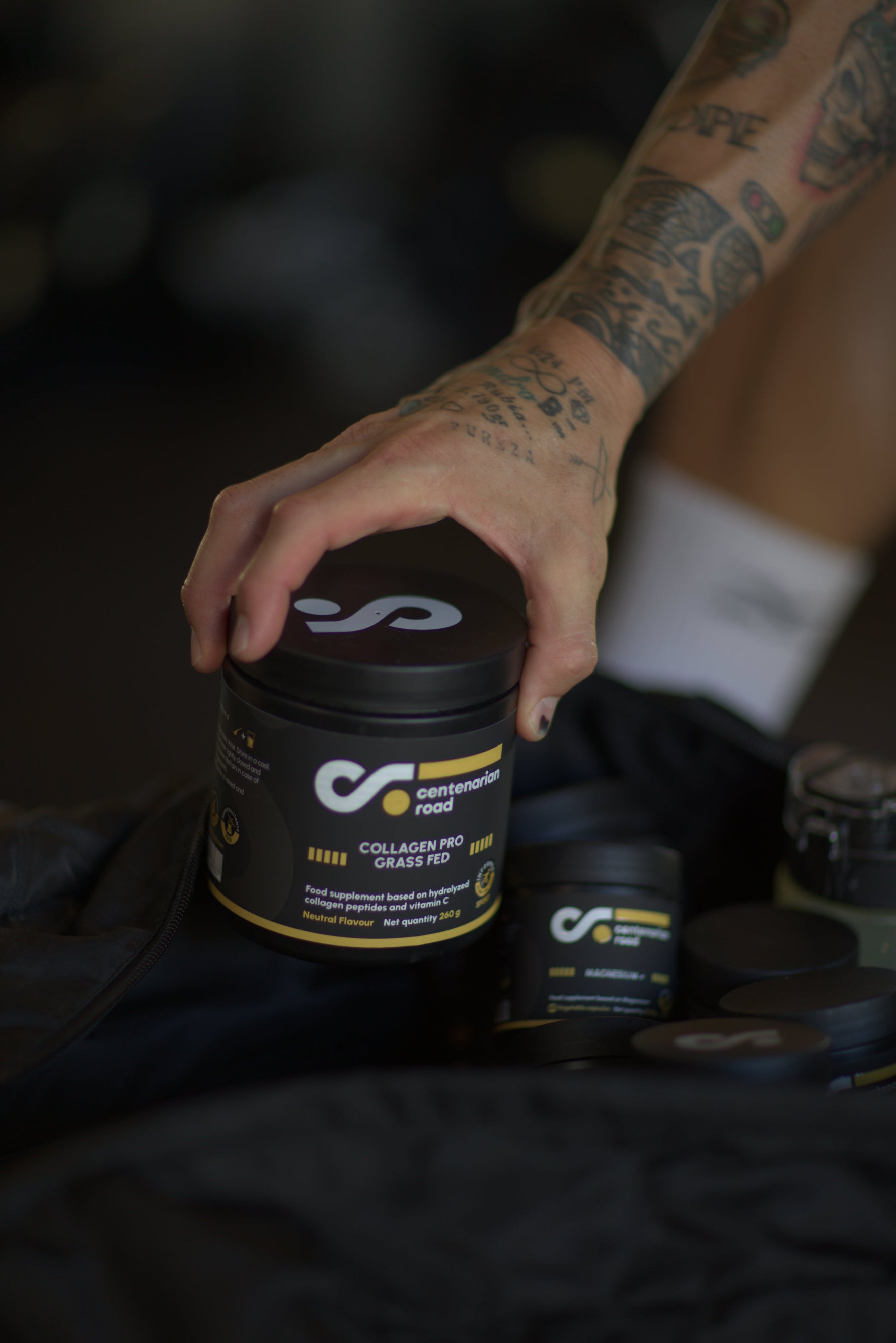
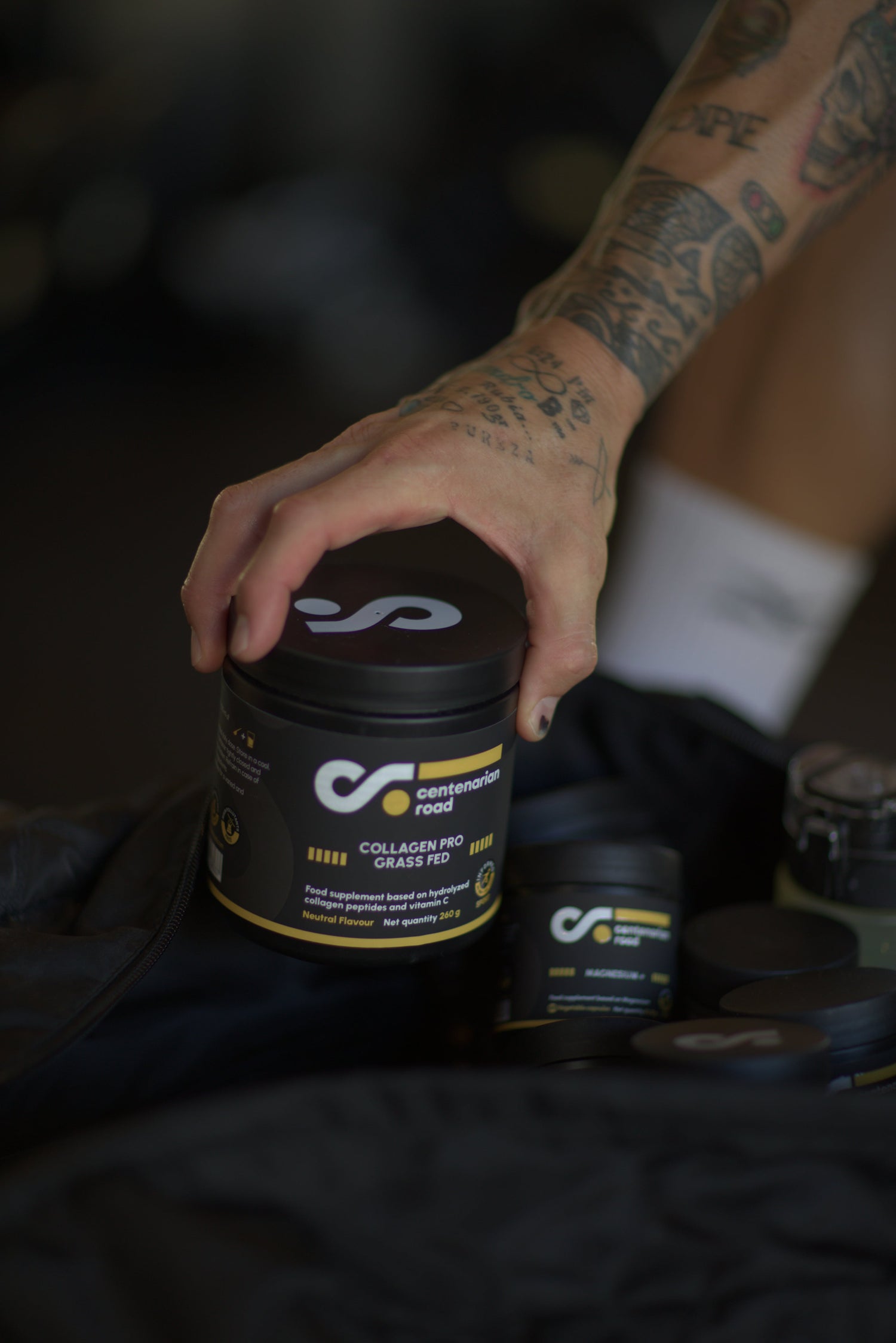
Collagen Pro Grass Fed by Centenarian Road combines 10 g of grass-fed hydrolyzed collagen Solugel® ULTRA BD with 80 mg of vitamin C, equivalent to 100% of the nutrient reference value. It is a powder formula designed for joints, skin, and connective tissues.
Each container provides 260 g, with 26 servings. The recommended serving is 1 scoop of 10 g dissolved in 200-250 ml of water or your preferred drink, once daily. The product also communicates Informed Sport, Lab Guaranteed Composition, and Main Pollutants Free certification.
Grass-fed hydrolyzed collagen with vitamin C, Solugel® technology, and 10 g per serving. It may fit as daily support for joints, skin, and connective tissues within a well-structured routine.
View product
It may make sense for active people, athletes, adults over 40-50, or anyone interested in supporting joints and mobility. It does not replace medical assessment in cases of diagnosed osteoarthritis, rheumatoid arthritis, joint injury, or persistent pain.

Scientific references
Efficacy and safety of low-molecular-weight collagen peptides in knee osteoarthritis — Park et al., 2025
Randomized, double-blind, placebo-controlled trial in adults with KL I-II knee osteoarthritis. It evaluated 3,000 mg/day of low-molecular-weight collagen peptides for 180 days, observing improvements in pain and physical function, without significant structural or inflammatory changes during the study period.
Original URL: https://pubmed.ncbi.nlm.nih.gov/40977985/
Efficacy and safety of collagen derivatives for osteoarthritis — Liang et al., 2024
Review and meta-analysis on collagen derivatives in osteoarthritis. It concludes that collagen derivatives may be useful and safe in osteoarthritis, although more studies are needed to validate long-term effects and better distinguish between collagen types.
Original URL: https://www.oarsijournal.com/article/S1063-4584%2824%2900004-9/fulltext
Efficacy of combined undenatured type II collagen and hydrolysed collagen supplementation in knee osteoarthritis — Yuenyongviwat et al., 2025
Randomized, double-blind, placebo-controlled trial in 68 patients with knee osteoarthritis. The combination of undenatured type II collagen and hydrolyzed collagen for 12 weeks was not superior to placebo, reinforcing the need to interpret the evidence carefully.
Original URL: https://www.nature.com/articles/s41598-025-17505-0
Oral administration of hydrolyzed collagen alleviates pain and improves locomotor function in knee osteoarthritis — Carrillo-Norte et al., 2024
Study on hydrolyzed collagen and knee osteoarthritis symptoms, with results related to osteoarticular pain, locomotor function, and possible reduction in analgesic or anti-inflammatory use as a complementary strategy.
Original URL: https://pmc.ncbi.nlm.nih.gov/articles/PMC11745964/
Effect of supplementation with type 1, 2 and 3 collagen on pain associated with osteoarthritis — Genç et al., 2024
Study on a product containing type I, II, and III collagen and its effect on osteoarthritis-related pain, quality of life, and physical function.
Original URL: https://pmc.ncbi.nlm.nih.gov/articles/PMC11734850/
Efficacy and safety of undenatured collagen type II in modulating knee joint function — Chang et al., 2026
Systematic review and meta-analysis on undenatured type II collagen in people with knee osteoarthritis and healthy subjects with activity-related joint discomfort. It summarizes improvements in pain, function, and quality-of-life scales, although interpretation should consider heterogeneity between studies.
Original URL: https://doaj.org/article/b8e93e54ce5145b09e958852c59e1de2
The potential of undenatured type II collagen against arthritis — Zhou et al., 2024
Review on the potential of undenatured type II collagen in osteoarthritis and arthritis, highlighting oral tolerance mechanisms, potential benefits, and the need for more high-quality clinical studies.
Original URL: https://link.springer.com/article/10.1186/s42825-024-00160-y
Scientific Opinion on the substantiation of health claims related to vitamin C — EFSA, 2009
Scientific opinion supporting authorized vitamin C claims, including its contribution to normal collagen formation for the normal function of cartilage, bones, skin, and blood vessels.
Original URL: https://efsa.onlinelibrary.wiley.com/doi/pdf/10.2903/j.efsa.2009.1226
Osteoarthritis versus rheumatoid arthritis — Mayo Clinic
Clinical resource that differentiates osteoarthritis, associated with cartilage wear, from rheumatoid arthritis, an autoimmune disease that initially affects the lining of the joints.
Original URL: https://www.mayoclinic.org/diseases-conditions/arthritis/multimedia/osteoarthritis-vs-rheumatoid-arthritis/img-20008728