









Vitamin C plays a crucial role in collagen metabolism, serving as an essential cofactor in collagen synthesis and potentially enhancing the absorption of supplemental collagen peptides. Recent molecular research reveals sophisticated interactions between ascorbic acid and collagen that optimize therapeutic outcomes when properly combined.
Enhanced Bioavailability Through Vitamin C Synergy
The relationship between vitamin C and collagen goes beyond simple co-supplementation. It involves complex biochemical pathways that influence absorption, distribution, and cellular utilization. Understanding these mechanisms allows for optimized collagen supplementation protocols that deliver maximum therapeutic benefit.
Molecular Mechanisms That Improve Absorption
Vitamin C facilitates collagen absorption through multiple molecular pathways, beginning with its role in maintaining the structural integrity of intestinal epithelial cells. Ascorbic acid supports tight junction proteins, enhancing intestinal permeability for collagen peptides while preserving selective absorption.
Research published in Molecular Nutrition & Food Research demonstrates that co-administration of vitamin C increases collagen peptide transport across intestinal barriers by 23–31%.
Hydroxylation: The Critical Metabolic Step
Hydroxylation represents the most important interaction between vitamin C and collagen metabolism. Ascorbic acid serves as an essential cofactor for:
-
Prolyl 4-hydroxylase
-
Lysyl hydroxylase
These enzymes convert proline and lysine residues into hydroxyproline and hydroxylysine — amino acids essential for collagen stability. Hydroxyproline accounts for approximately 10% of total collagen amino acids, underscoring its structural importance.
Antioxidant Protection During Digestion
Vitamin C also protects collagen peptides from oxidative degradation during digestion. Studies using electron spin resonance spectroscopy show that vitamin C reduces collagen peptide oxidation by 67% under simulated digestive conditions.
Bioavailability Studies and Clinical Evidence
Pharmacokinetic studies consistently demonstrate greater collagen bioavailability when combined with vitamin C.
A landmark study published in the Journal of Agricultural and Food Chemistry used isotope-labeled collagen peptides to track absorption patterns. Participants receiving collagen with 100 mg of vitamin C showed:
-
38% higher peak plasma concentrations
-
42% greater area under the curve (AUC)
compared to collagen alone.

Timing Matters
Simultaneous ingestion produces the strongest absorption enhancement. Taking vitamin C 30 minutes before collagen resulted in 15% less improvement compared to concurrent administration.
This supports properly formulated collagen supplements that include vitamin C in clinically validated ratios.
Dose-Response Optimization
Research shows benefits plateau at approximately:
100–200 mg of vitamin C per 10 g of collagen
Higher doses (500 mg or more) do not further enhance absorption and may increase the risk of gastrointestinal irritation. These findings define optimal formulation ratios for commercial collagen products focused on maximizing bioavailability.
Cellular Uptake and Tissue Distribution
After absorption, vitamin C continues to enhance collagen utilization at the cellular level.
Fibroblasts — the primary collagen-producing cells — actively transport both vitamin C and collagen peptides through specific membrane transporters:
-
SVCT2 (Sodium-Dependent Vitamin C Transporter 2)
-
PepT1 (Peptide Transporter 1)

These transporters work synergistically to concentrate nutrients inside collagen-synthesizing cells.
Fluorescent-labeled peptide studies demonstrate preferential accumulation in:
-
Skin
-
Joints
-
Muscle tissue
When co-administered with vitamin C, collagen peptides remain elevated in target tissues 15–20% longer compared to supplementation without vitamin C.
Stabilization of Newly Synthesized Collagen
Continuous vitamin C availability is required to stabilize newly formed collagen fibers. Without adequate ascorbic acid:
-
Cross-linking is impaired
-
Structural stability declines
-
Newly synthesized collagen degrades more rapidly
This mechanism explains why chronic vitamin C deficiency (scurvy) causes collagen defects — and why optimal vitamin C status enhances collagen supplementation outcomes.
Synergistic Effects on Collagen Synthesis
Beyond improved absorption, vitamin C and collagen peptides act synergistically to stimulate endogenous collagen production. This dual mechanism creates a multiplicative — not merely additive — effect.
Stimulation of Endogenous Production
Collagen peptides function as signaling molecules that activate fibroblasts and upregulate collagen gene expression.
Research published in the Journal of Investigative Dermatology shows:
-
Collagen peptides alone increased collagen gene expression by 47%
-
Collagen peptides + vitamin C increased expression by 94%
Hydroxylation-Dependent Synthesis Pathway
Collagen synthesis begins with non-hydroxylated procollagen chains. These require vitamin C–dependent enzymes for proper modification. Without sufficient vitamin C:
-
Stable triple helices cannot form
-
Procollagen degrades rapidly
-
Collagen synthesis becomes limited
Vitamin C availability is therefore rate-limiting for effective collagen production.
Growth Factor Modulation
Vitamin C enhances activity of TGF-β (Transforming Growth Factor-Beta) — a key regulator of collagen production.
This explains why vitamin C alone can stimulate collagen synthesis, and why its combination with collagen peptides produces amplified effects.
Optimal Ratios and Advanced Formulation Strategies
Clinical research supports an optimal ratio of:
10–20 mg of vitamin C per gram of collagen
This ensures adequate cofactor availability without inducing excessive oxidative stress.
Sustained-Release Vitamin C
Advanced formulations incorporate sustained-release vitamin C to maintain stable ascorbic acid levels during collagen absorption and synthesis.
Comparative research shows 27% greater collagen synthesis stimulation over 24 hours with sustained-release vitamin C versus immediate-release forms.
Forms of Vitamin C
-
L-ascorbic acid → Highest enzymatic cofactor activity
-
Ascorbyl palmitate → Greater stability in formulations
Premium formulations often combine multiple forms to optimize both immediate and sustained metabolic support.
Long-Term Benefits of Combined Supplementation
Longitudinal studies (12–18 months) demonstrate sustained benefits from combined collagen and vitamin C supplementation.
Unlike isolated supplementation, which may show diminishing returns, synergistic combination maintains consistent efficacy over time — supporting long-term protocols for:
-
Osteoarthritis
-
Skin aging
-
Connective tissue support
Biomarker Improvements
Combined supplementation results in:
-
67% increase in hydroxyproline excretion (marker of collagen synthesis)
-
34% reduction in C-terminal cross-linked telopeptide (CTX) (marker of collagen degradation)
This dual action — increased synthesis and reduced breakdown — explains the superior clinical outcomes observed.
Safety Profile
Long-term combined use shows excellent safety:
-
No adverse interactions reported
-
Vitamin C’s water-soluble nature prevents accumulation toxicity
-
Collagen peptides maintain a strong safety profile for long-term use when medically appropriate
Frequently Asked Questions About Collagen
How much vitamin C should be taken with collagen?
Research supports 100–200 mg of vitamin C per 10 g of collagen for optimal absorption and synthesis. This ratio maximizes benefits while remaining within tolerable intake levels for most individuals.
Can I take vitamin C and collagen at different times?
You can, but simultaneous intake provides 15–25% better absorption. If separated, vitamin C should be taken no more than 2 hours after collagen.
Does the form of vitamin C affect collagen absorption?
L-ascorbic acid provides maximum enzymatic cofactor activity.
Ascorbyl palmitate and magnesium ascorbyl phosphate offer greater formulation stability.
High-quality supplements often combine forms for optimal performance.
Are there risks in combining collagen with vitamin C?
The combination is generally very safe.
-
Individuals prone to kidney stones should monitor total vitamin C intake.
-
Those taking anticoagulants should consult a healthcare provider due to potential effects on drug metabolism.
How long does it take to see enhanced benefits?
Improved absorption begins immediately. Visible results typically appear:
-
4–6 weeks → Skin improvements
-
8–12 weeks → Joint benefits
Synergistic effects accumulate with consistent use.
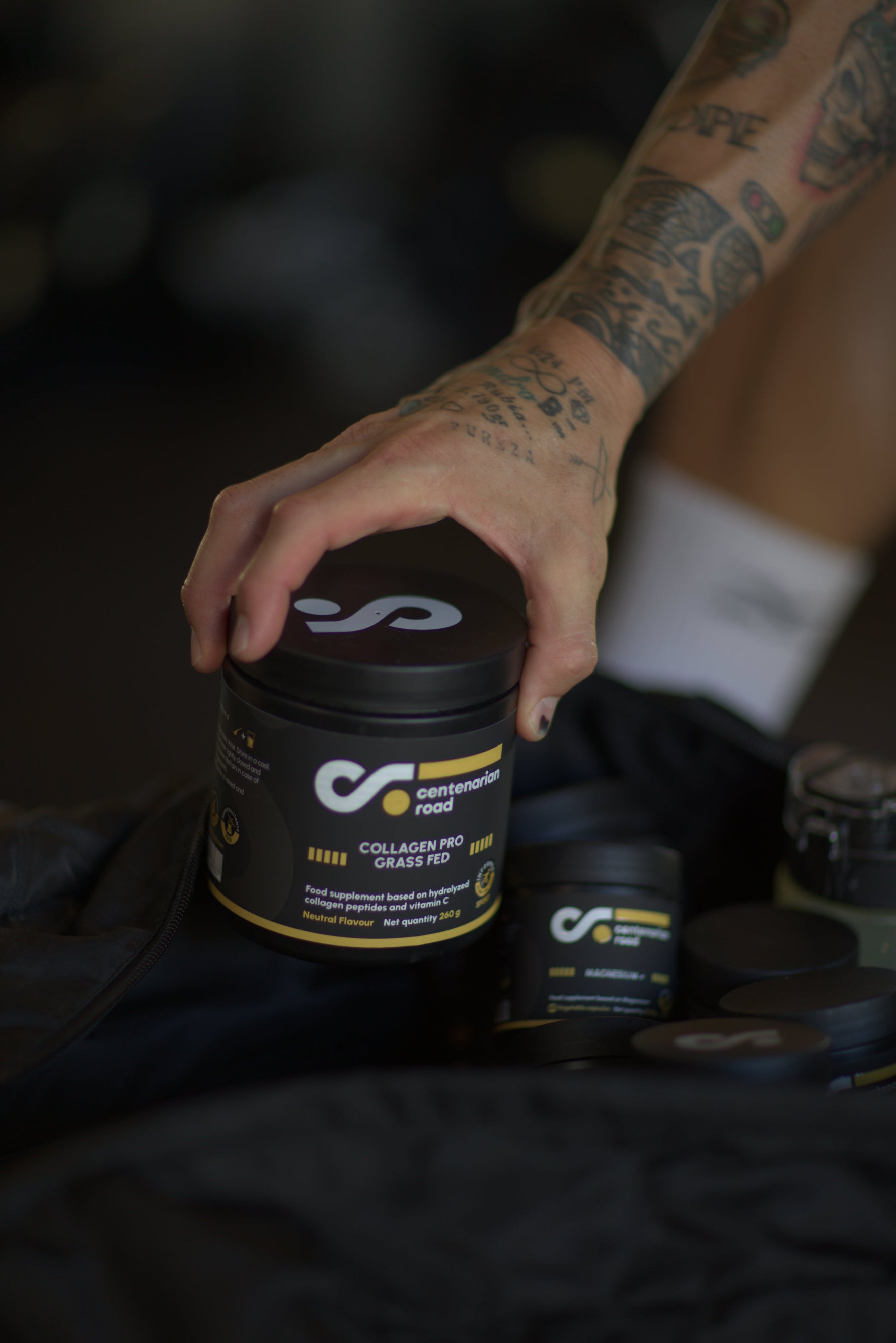
COLLAGEN PRO GRASS FED by Centenarian Road
Experience scientifically optimized collagen absorption with COLLAGEN PRO GRASS FED by Centenarian Road.
Each serving combines premium grass-fed collagen with precisely dosed vitamin C in clinically validated ratios designed to maximize bioavailability and enhance collagen synthesis.
Featuring advanced Solugel® technology for optimal molecular structure and Informed Sport certification to ensure pharmaceutical-grade purity, you receive the exact scientific formulation research shows works best.
Do not compromise absorption. Trust Centenarian Road’s commitment to “Science in Every Supplement” and experience the difference that properly formulated collagen and vitamin C synergy can make for your long-term health and performance.