









What if one of the most overlooked recovery tools wasn’t another protein shake—but collagen?
While collagen is widely known for supporting skin health, its benefits go far beyond aesthetics. For active individuals, athletes, and longevity-focused lifestyles, collagen plays a vital role in repairing muscles, strengthening connective tissue, and accelerating post-workout recovery.
After intense exercise, your muscle fibers experience microscopic damage that must be repaired to become stronger and more resilient. Traditional proteins help support muscle protein synthesis, but collagen delivers unique amino acids—especially glycine, proline, and hydroxyproline—that are essential for tendons, ligaments, fascia, and overall structural recovery.
If your goal is to train harder, recover smarter, and stay active for decades, collagen deserves a place in your routine.
What Is Collagen and Why Does It Matter for Muscle Recovery?
Collagen is the most abundant protein in the human body. It forms the structural framework of muscles, tendons, ligaments, cartilage, bones, and skin.
During training, stress is placed not only on muscle tissue, but also on the connective structures that support movement. This is where collagen becomes especially valuable.
Hydrolyzed collagen peptides provide highly bioavailable amino acids that help support:
- Muscle tissue repair
- Tendon resilience
- Ligament strength
- Joint comfort
- Mobility and flexibility
- Long-term athletic durability
Emerging research suggests collagen supplementation may also support lean body mass when combined with resistance training.

Key Benefits of Collagen for Post-Workout Recovery
Supports Faster Tissue Repair
Exercise creates controlled stress in the body. Recovery is when progress happens.
Collagen provides the raw materials needed to rebuild damaged tissue efficiently, helping reduce downtime between sessions and supporting consistent training performance.
Helps Reduce Muscle Soreness
Delayed onset muscle soreness (DOMS) is common after intense exercise, especially strength training or unfamiliar movement patterns.
Because collagen supports tissue repair and healthy inflammatory response, many users report reduced soreness, stiffness, and better movement after demanding workouts.
Strengthens Tendons and Ligaments
Muscles may recover quickly—but tendons often take longer.
This matters because connective tissue injuries are one of the most common reasons athletes lose training consistency. Collagen may help reinforce these tissues, supporting injury prevention and movement longevity.
Enhances Mobility and Flexibility
Strong performance requires more than muscle. It also requires healthy joints, supple fascia, and efficient movement mechanics.
Collagen can help maintain joint comfort and flexibility, allowing smoother movement and better training output.
Supports Lean Strength as You Age
Natural collagen production declines with age. This can affect recovery speed, joint health, and structural integrity.
For adults focused on vitality and healthy aging, collagen can be a strategic daily foundation.
How to Use Collagen for Optimal Recovery
Choose Hydrolyzed Collagen Peptides
Hydrolyzed collagen (collagen peptides) is broken down into smaller particles for easier digestion and absorption.
For premium results, choose grass-fed, high-purity formulas with transparent sourcing and advanced processing.
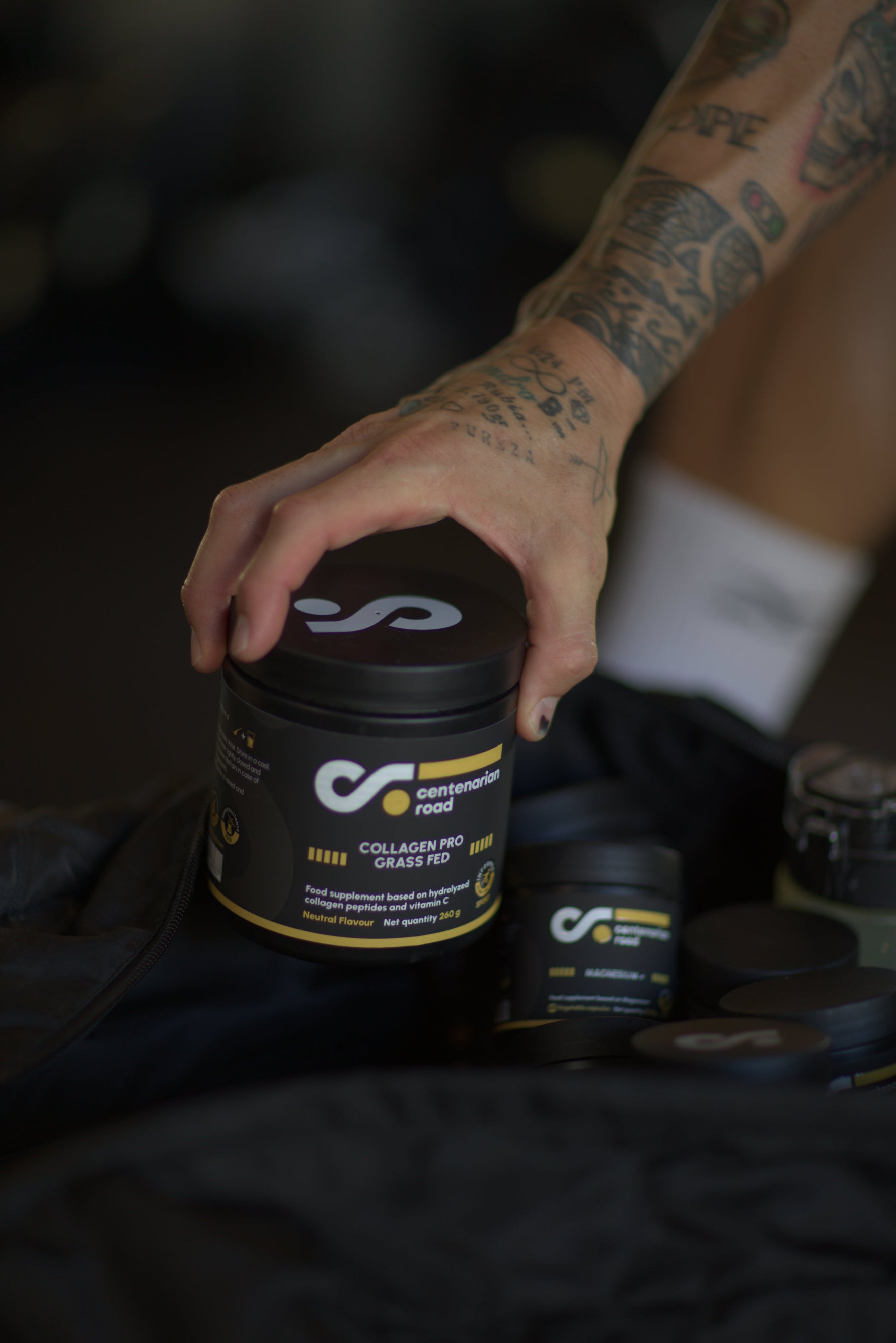
At Centenarian Road, Collagen Pro Grass Fed with Solugel® technology is designed for superior bioavailability and performance-focused recovery.
Daily Effective Dose
Most studies and practitioners recommend:
- 10g daily for general recovery and wellness
- 15g daily for athletes or intense training blocks
Consistency matters more than occasional high doses.
Best Time to Take Collagen
You can take collagen:
- Post-workout in a shake
- In the morning with coffee or smoothies
- Between meals
- Before mobility or rehab sessions
Daily adherence is more important than timing.
Collagen-Rich Foods That Complement Supplementation
To naturally support collagen production, include:
- Bone broth
- Wild-caught fish
- Eggs
- Chicken skin
- Slow-cooked meats
- Vitamin C-rich fruits (supports collagen synthesis)
For best results, combine collagen with a protein-rich diet and strength training.
How Long Does Collagen Take to Work?
Many people notice early improvements in recovery, joint comfort, and soreness within 4 to 6 weeks.
Longer-term benefits—such as connective tissue resilience, mobility, and sustained performance—typically build over several months of consistent use.

Frequently Asked Questions
Does collagen help reduce muscle soreness after workouts?
Yes. Collagen may help reduce post-workout muscle soreness by supplying key amino acids such as glycine and proline, which support tissue repair and recovery. It may also help maintain a balanced inflammatory response, easing stiffness and discomfort after intense exercise.
Is collagen better than whey protein for muscle recovery?
Collagen and whey protein serve different but complementary roles. Whey protein is highly effective for stimulating muscle protein synthesis and supporting muscle growth. Collagen is better suited for tendons, ligaments, joints, and connective tissue recovery. For complete performance recovery, many athletes use both.
Can collagen improve athletic performance?
Yes, indirectly. Collagen may enhance athletic performance by improving recovery time, supporting joint mobility, strengthening connective tissue, and reducing training-related discomfort. This can help you train more consistently, recover faster, and perform at a higher level over time.
Can I take collagen with creatine or whey protein?
Absolutely. Collagen combines well with creatine, whey protein, magnesium, and essential amino acids. This type of recovery stack can support muscle repair, strength output, hydration, connective tissue health, and overall training performance.