









Gelatin comes from collagen, but it is not the same as hydrolysed collagen. The main difference is processing: gelatin retains protein chains that can form a gel when cooled, while hydrolysed collagen contains smaller fragments and generally dissolves without gelling.
Both provide amino acids derived from collagen. That does not mean they have the same culinary uses, identical composition or interchangeable clinical results.
Collagen vs gelatin: key differences
Collagen
A family of structural proteins found in animal connective tissues. The term can refer to collagen in tissue or to different commercial ingredients.
Gelatin
Produced by processing collagen and changing its structure. Its chains can form a gel when prepared and cooled under suitable conditions.
Hydrolysed collagen
Undergoes further hydrolysis, producing a mixture of smaller peptides. It generally dissolves without forming a gel.
Common use
Gelatin gives foods texture; hydrolysed collagen peptides are used as soluble ingredients in foods and supplements.
Source, processing and formulation can affect the properties of either ingredient. Check the label and preparation instructions.
How is gelatin made from collagen?
Collagen in animal tissues can undergo treatments that alter its structure and produce gelatin. The process involves denaturation and can include partial breakdown of protein chains.
Commercial gelatin contains a mixture of chains of different lengths. Some can form a water-holding network as a preparation cools, explaining its use for a firm or gelled texture.
Gelling depends on the product, concentration and preparation. Not all foods sold as “gelatin desserts” contain the same amount of animal-derived gelatin.
What changes when collagen is hydrolysed?
Hydrolysis breaks bonds in protein chains to produce smaller peptides. It can use enzymes or other methods; the final peptide profile depends on the raw material and process.
In practice, collagen peptides are usually soluble and do not form the same gel as culinary gelatin. This makes them convenient for drinks and other preparations, although solubility varies by product.
For more detail, read our guide to collagen peptides.
Gelatin powder vs gelatin dessert
Unflavoured gelatin used as an ingredient can consist mainly of protein. A ready-to-eat gelatin dessert also contains water and may include sugar, sweeteners, flavours or other ingredients.
Compare grams of protein or gelatin per prepared serving, not just package weight. A 100 g bowl of dessert is not equivalent to 100 g of gelatin powder.
Some desserts use other gelling agents, such as agar or pectin. These are not collagen-derived gelatin, so check the ingredient list.
What do gelatin and collagen peptides contain?
Both come from proteins rich in amino acids such as glycine, proline and hydroxyproline. Their proportions and peptide profiles can vary with source and processing.
After ingestion, proteins and peptides are digested and their components absorbed to varying degrees. The body uses amino acids for many processes; it cannot be assumed that an amount consumed becomes the same amount of collagen in skin or joints.
Collagen and gelatin have a different amino acid profile from other dietary proteins. To meet general protein needs, maintain a varied diet rather than relying on these ingredients alone.
Is hydrolysed collagen absorbed better than gelatin?
Processing affects fragment size and how each preparation behaves during digestion. Some studies have detected differences in blood concentrations of certain peptides, while others have found similar responses for several amino acids after gelatin or hydrolysed collagen.
Results depend on the product, amount and measurement. Detecting a peptide in blood does not by itself demonstrate a clinical benefit or prove that every hydrolysate is superior to every gelatin.
What research says about gelatin and collagen
Gelatin, vitamin C and exercise
In a small study, eight healthy men consumed vitamin C-enriched gelatin or placebo before brief jumping sessions. Researchers observed changes in amino acids and a blood marker related to collagen synthesis.
This is an experimental signal, not proof that gelatin prevents injuries or repairs tendons in everyone. The study used a specific preparation and protocol.
Comparing different preparations
Another study with ten recreationally active men compared vitamin C-enriched gelatin, hydrolysed collagen and a combined preparation with placebo. Some markers showed trends, but variability prevented statistically significant differences between treatments.
Findings from a tested gelatin cannot automatically be applied to any commercial supplement. Review the ingredient, amount, population, duration and outcome measured.
How to choose between gelatin and hydrolysed collagen
For a firm texture
Culinary gelatin may be useful for foods intended to set, following its preparation instructions.
For a soluble mixture
Hydrolysed collagen may be convenient in drinks and other preparations when a gelled texture is not wanted.
When comparing amounts
Check grams of ingredient or protein per serving, and distinguish powder weight from prepared food weight.
For a health goal
Consider what has been studied for that outcome; do not attribute results from one preparation to another formula.
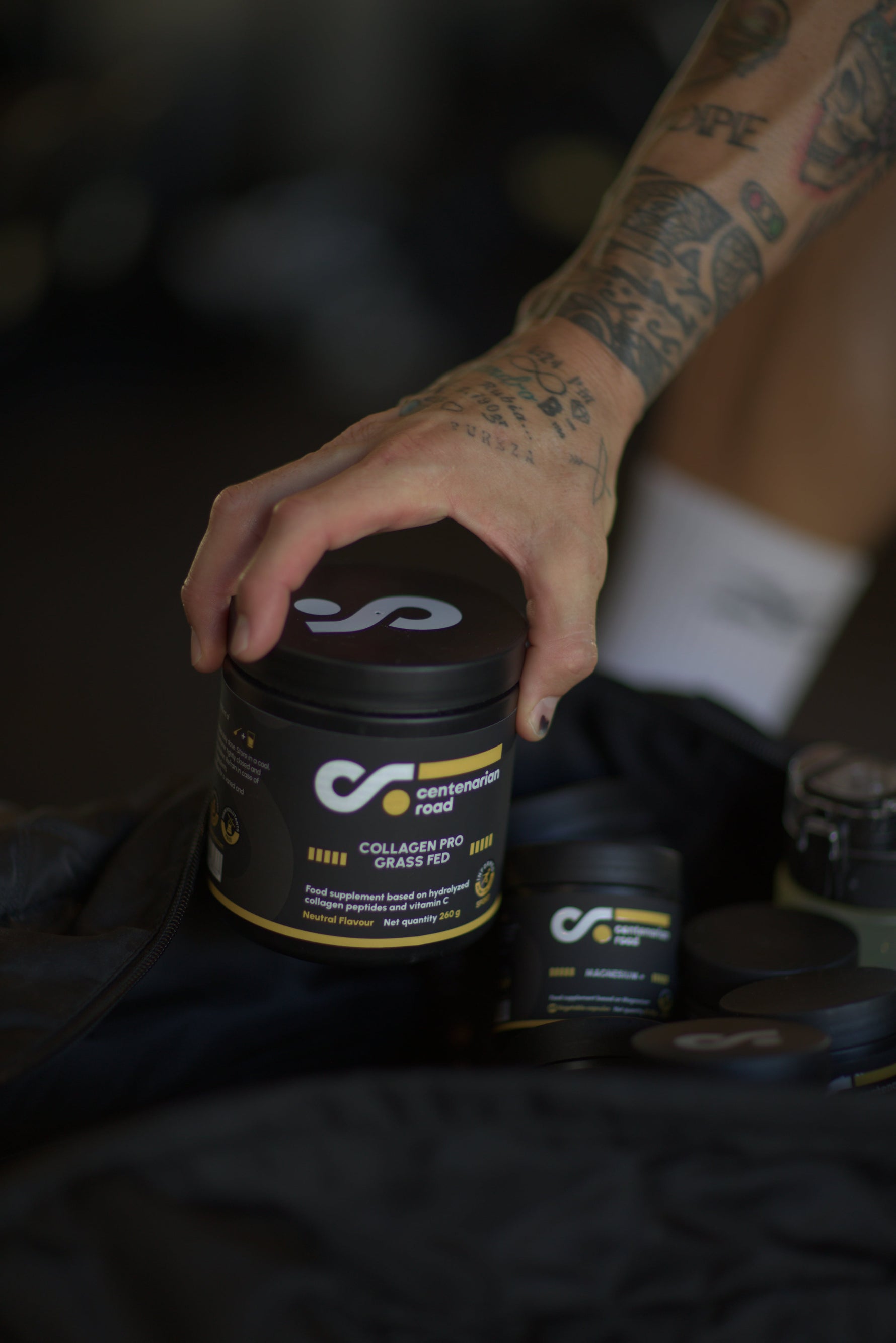
Formula example: Collagen Pro Grass Fed
The Collagen Pro Grass Fed product page lists Solugel® hydrolysed collagen and vitamin C. Its nutritional information declares 10 g hydrolysed collagen and 80 mg vitamin C per 10 g serving.
It is a soluble formula rather than an ingredient intended to set like culinary gelatin. Vitamin C contributes to normal collagen formation, but its presence does not automatically transfer the results of the gelatin trial to this product.

Frequently asked questions about collagen and gelatin
Is agar a gelatin that contains collagen?
No. Agar is a gelling agent derived from algae, not animal collagen. It can provide texture but does not supply the same protein.
Does a sugar-free gelatin dessert necessarily contain lots of protein?
No. “Sugar-free” describes sugar content, not the amount of gelatin or protein. Check the protein per serving on the nutrition label.
Is a product containing gelatin suitable for vegans?
Food gelatin is derived from animal collagen and is not vegan. Some desserts use plant- or algae-based gelling agents; check the specific product's label.
Do more grams of collagen guarantee better results?
Not necessarily. Outcomes depend on the goal, preparation and available evidence. The amount alone does not establish a specific clinical benefit.
Scientific references and sources
Sources reviewed: 29 October 2026. The cited studies used specific preparations and protocols.
- Shaw G et al. Vitamin C-enriched gelatin supplementation before intermittent activity augments collagen synthesis. 2017. Experimental study with eight participants.
- Lis DM and Baar K. Effects of Different Vitamin C-Enriched Collagen Derivatives on Collagen Synthesis. 2019. Comparison in ten participants.
- The impact of collagen protein ingestion on musculoskeletal connective tissue remodeling. 2022. Review of processing, digestion and evidence limitations.
- Comparison of gelatin and low-molecular weight gelatin hydrolysate ingestion. 2021. Study of compounds detected in blood.
- Centenarian Road: Collagen Pro Grass Fed product information.